What Are EN Gate Valves?
This article explains what EN gate valves are, how they operate, why industry standards matter (including EN 1074 & EN 1171), and how professionals choose them for water, industrial, and process applications. We combine authoritative sources and practical insights to support engineers, procurement teams, and technical buyers in understanding “why EN gate valves are essential” and “how best to use them.” Case references from Zhejiang Hengnuo Valve Manufacturing Co., Ltd. are included to support real‑world context.
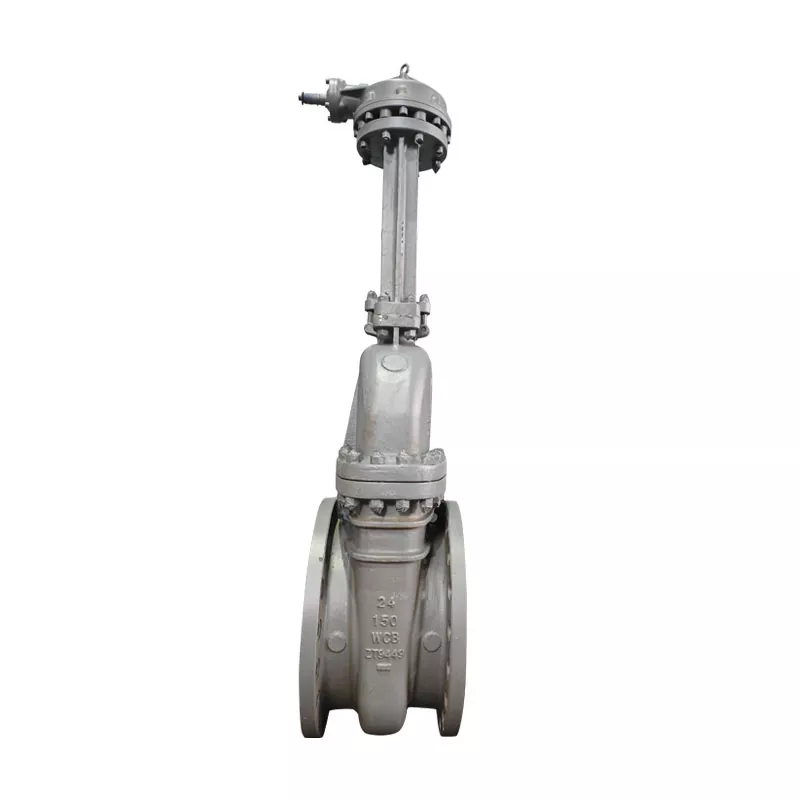
Table of Contents
- What Is an EN Gate Valve?
- How Does a Gate Valve Operate?
- What Are EN Standards for Gate Valves?
- Which Types of Gate Valves Exist?
- Why Use EN Gate Valves?
- FAQ
What Is an EN Gate Valve?
An EN gate valve refers to a gate valve that conforms to European Norm (EN) standards, designed for isolating flow in pipelines with minimal pressure loss. Gate valves open by lifting a gate (flat or wedge shaped) out of the fluid path, offering full bore flow with little resistance when fully open. Gate valves are commonly used for on/off control rather than throttling.
How Does a Gate Valve Operate?
Operation of a gate valve is simple but critical to its performance. When the handwheel or actuator is turned, the threaded stem lifts or lowers the gate inside the valve body:
- Open Position: The gate is lifted out of the pipeline, allowing unobstructed flow.
- Closed Position: The gate presses into the seat and prevents fluid flow.
This “linear sliding” principle allows for a full‑flow path with minimal disruption and pressure drop.
What Are EN Standards for Gate Valves?
EN standards define how gate valves must be designed, tested, and marked for quality, safety, and interchangeability in Europe. Important EN standards include:
| Standard | Description |
|---|---|
| EN 1074‑1 & EN 1074‑2 | General and performance requirements for gate valves used in water supply systems, focusing on durability, pressure testing, and leakage control. |
| EN 1171 | Specifications for ductile iron gate valves for potable water, including seat types and stem designs. |
| EN 1984 | Industrial steel gate valves for general use. |
These standards ensure that materials, testing, pressure ratings, and corrosion resistance meet strict quality requirements for industrial and municipal projects.
Which Types of Gate Valves Exist for EN and Industrial Applications?
By Stem Design
- Rising Stem Gate Valves – Visual indication of position and easy inspection.
- Non‑Rising Stem Gate Valves – Stem rotates internally, ideal for confined spaces.
By Gate Shape
- Wedge Gate Valve – Wedge shaped gate for tight sealing.
- Parallel Gate Valve – Parallel faces designed for low pressure.
- Double Disc Gate Valve – Two sealing discs for large‑diameter pipelines.
By Materials
- Cast Steel Gate Valves – robust and suitable for high pressure.
- Stainless Steel Gate Valves – corrosion resistant.
Why Use EN Gate Valves in Projects?
EN gate valves are preferred in engineering specifications because:
- Regulatory Compliance: EN standards ensure valves meet European safety and performance benchmarks.
- Reliable Shut‑Off: Excellent sealing prevents leakage in water supply and industrial systems.
- Minimal Pressure Loss: Full bore design allows smooth flow with low energy loss.
Frequently Asked Questions (FAQ)
What is the difference between EN gate valves and other valve standards?
EN gate valves are designed to meet European Norm standards for performance and safety, particularly EN 1074 for water supply, whereas other standards like ANSI or API focus on different regional or industry requirements.
How do EN gate valves function in a water system?
EN gate valves allow or stop fluid flow by lifting an internal gate, creating an unobstructed flow path when open, and a tight seal when closed—ideal for on/off control in water mains or treatment facilities.
Which materials are common for EN gate valves?
Common materials include ductile iron, cast steel, and stainless steel, selected based on media type, pressure, and temperature requirements to ensure long service life and standard compliance.
Why should gate valves not be used for throttling?
Gate valves are designed for full open or full close; partially opening them causes turbulence, vibration, and wear on sealing surfaces, which leads to shortened service life.
Are EN gate valves suitable for high‑pressure applications?
Yes, EN gate valves designed under appropriate standards and materials can be specified for high‑pressure systems, but engineers must verify ratings according to project codes and conditions.