How Do Steel Gate Valves Control Flow in Industrial Pipeline Systems?
Article Abstract
Steel gate valves are widely applied in industrial pipeline systems where full-bore flow control, high pressure resistance, and structural reliability are required. This article focuses on how steel gate valves function, how to evaluate their technical parameters, and how they perform in demanding operating environments. By combining product overview, engineering specifications, application scenarios, and frequently asked technical questions, the article provides a comprehensive reference for industrial users seeking long-term operational stability and compliance with international standards.
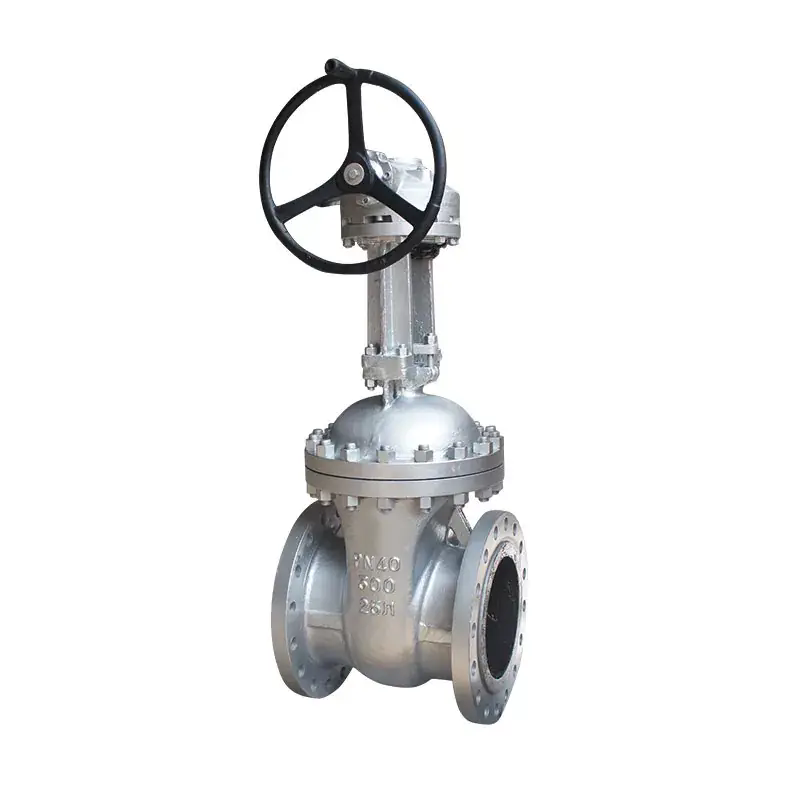
Table of Contents
- 1. How Are Steel Gate Valves Designed for Industrial Flow Control?
- 2. How Do Steel Gate Valve Parameters Affect Performance?
- 3. How Are Steel Gate Valves Applied Across Industries?
- 4. How to Address Common Questions About Steel Gate Valves?
1. How Are Steel Gate Valves Designed for Industrial Flow Control?
Steel gate valves are linear-motion valves designed to start or stop fluid flow by raising or lowering a gate perpendicular to the flow direction. Unlike throttling valves, gate valves are primarily used in fully open or fully closed positions, minimizing pressure loss and turbulence.
The valve body and internal components are manufactured from carbon steel, alloy steel, or stainless steel to ensure mechanical strength, corrosion resistance, and dimensional stability under high pressure and temperature conditions. The wedge or gate travels along guided seats, providing tight shutoff when closed and unobstructed flow when open.
In industrial pipeline systems, steel gate valves are preferred due to their ability to handle large diameters, withstand extreme pressures, and maintain structural integrity during long-term operation. These characteristics make them suitable for oil and gas transmission, power generation, petrochemical processing, and water infrastructure projects.
The core objective of this article is to explain how steel gate valves achieve reliable isolation, how their specifications influence performance, and how to select appropriate configurations for different industrial environments.
2. How Do Steel Gate Valve Parameters Affect Performance?
Understanding technical parameters is critical when selecting steel gate valves for industrial use. Each specification directly influences operational reliability, safety compliance, and service life.
| Parameter | Specification Range | Technical Significance |
|---|---|---|
| Nominal Diameter (DN) | DN50 – DN1200 | Determines flow capacity and pipeline compatibility |
| Pressure Rating | PN10 – PN420 / Class 150 – Class 2500 | Defines maximum allowable working pressure |
| Body Material | Carbon Steel, Alloy Steel, Stainless Steel | Affects strength, corrosion resistance, and temperature tolerance |
| Temperature Range | -29°C to +600°C | Ensures suitability for cryogenic or high-temperature applications |
| Connection Type | Flanged, Butt-Welded, Socket-Welded | Impacts installation method and sealing integrity |
| Operation Mode | Manual, Gear, Electric, Pneumatic | Determines control precision and automation level |
These parameters must align with system design requirements and relevant standards such as API 600, API 602, API 6D, ASME B16.34, and ISO 10434. Proper parameter selection ensures that steel gate valves maintain sealing performance and mechanical stability throughout their service life.
3. How Are Steel Gate Valves Applied Across Industries?
Steel gate valves play a critical role in a wide range of industrial sectors due to their robust construction and reliable shutoff capabilities.
Oil and Gas Transmission
In upstream, midstream, and downstream operations, steel gate valves are used to isolate pipeline sections, control wellhead flow, and protect equipment during maintenance. Their full-bore design minimizes pressure drop, making them suitable for long-distance crude oil and natural gas pipelines.
Power Generation
Thermal, nuclear, and combined-cycle power plants rely on steel gate valves for steam isolation, boiler feedwater control, and auxiliary systems. High-temperature and high-pressure tolerance ensures safe operation under continuous load conditions.
Chemical and Petrochemical Processing
Steel gate valves are commonly installed in chemical processing units where aggressive media, elevated temperatures, and strict safety requirements exist. Material selection and surface treatments enhance resistance to corrosion and erosion.
Water and Infrastructure Systems
In municipal water supply and industrial wastewater systems, steel gate valves provide dependable isolation for large-diameter pipelines. Their durability supports long service intervals and reduced maintenance frequency.
4. How to Address Common Questions About Steel Gate Valves?
How do steel gate valves differ from other valve types?
Steel gate valves are designed for on-off service rather than flow regulation. Compared to globe or ball valves, they offer minimal flow resistance when fully open and are better suited for large-diameter, high-pressure pipelines.
How should steel gate valves be installed to ensure sealing performance?
Proper alignment with the pipeline, correct bolt torque on flanges, and adherence to welding procedures are essential. Valves should be installed in the fully open position during welding to prevent seat damage and deformation.
How is the service life of steel gate valves extended?
Service life can be extended through appropriate material selection, periodic inspection, proper lubrication of stem threads, and operation within specified pressure and temperature limits. Compliance with maintenance schedules significantly reduces unplanned downtime.
How do operating conditions influence valve selection?
Operating pressure, temperature, fluid characteristics, and automation requirements directly impact valve configuration. Selecting a valve that exceeds minimum operating conditions improves safety margins and long-term reliability.
Conclusion and Industry Outlook
Steel gate valves continue to be a foundational component in industrial flow control systems due to their structural strength, adaptability, and proven performance. As industrial standards evolve and automation levels increase, steel gate valves are being integrated with advanced actuators and monitoring systems to meet future operational demands.
Manufacturers such as Hanno continue to refine material technology, manufacturing precision, and quality control processes to support increasingly complex industrial applications. By aligning product design with international standards and field-proven engineering practices, steel gate valves remain a dependable solution for critical pipeline systems.
For project-specific guidance, technical consultation, or detailed product information, contact us to discuss how steel gate valves can be configured to meet exact operational requirements.