What Makes Cast Iron Gate Valves a Durable Choice for Water Supply Systems?
Beneath every city street lies an invisible network of pipes and valves that delivers water to homes, businesses, and fire hydrants. Among the components in this buried infrastructure, few are more critical than the gate valve. When a water main bursts, or when maintenance requires isolating a section of pipe, the gate valve must perform flawlessly. But in many older systems, decades-old valves have become seized, leaking, or impossible to operate. The difference between a valve that remains serviceable for decades and one that fails within a few years often comes down to one factor: the material from which it is made.
Cast iron gate valves have been the backbone of water supply systems for over a century. Their durability is not accidental—it is the result of carefully selected materials, proven design features, and manufacturing processes refined over generations. This article provides a systematic technical analysis of what makes cast iron gate valves the durable choice for water supply systems. We will examine the metallurgy of cast iron, the design features that extend service life, the manufacturing processes that ensure quality, and the field performance data that validates their long-term reliability. For engineers, utilities, and facility managers selecting valves for new or upgraded infrastructure, understanding these factors is essential for making informed procurement decisions.
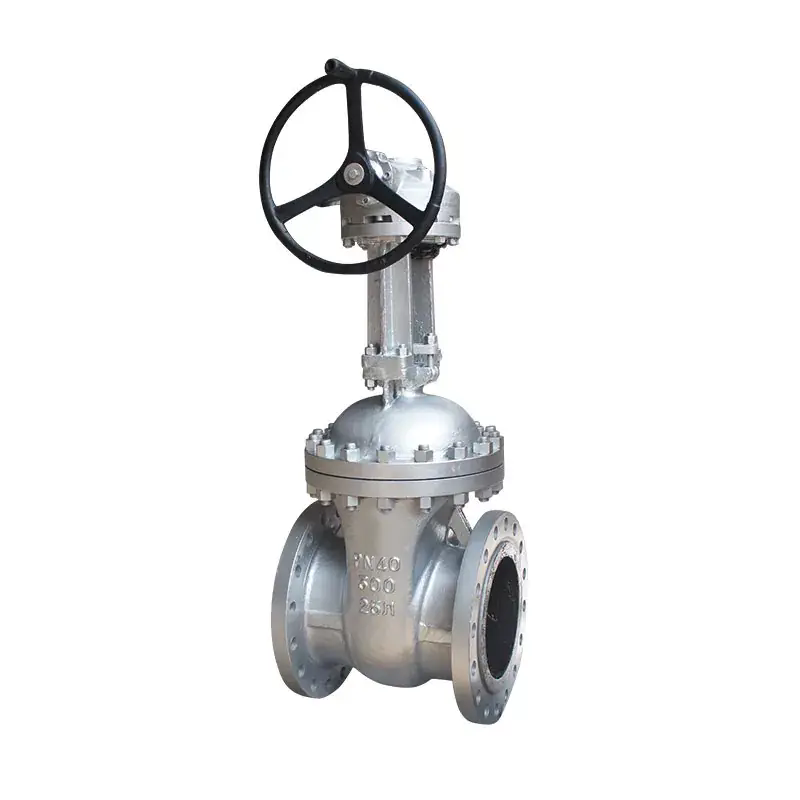
Table of Contents
- 1. What Is a Cast Iron Gate Valve and How Does It Work?
- 2. The Material Advantage
- 3. A Service Life Record from the Field
- 4. Design Features That Extend Service Life
- 5. The Manufacturing Process That Makes the Difference
- 6. Frequently Asked Questions (FAQ)
- 7. Conclusion
1. What Is a Cast Iron Gate Valve and How Does It Work?
A cast iron gate valve is a linear-motion valve that uses a flat or wedge-shaped gate to control the flow of fluid through a pipe. The valve is operated by turning a threaded stem, which raises or lowers the gate into the flow path. When the gate is fully open, it is completely retracted from the flow path, creating a straight-through passage with minimal flow restriction. When the gate is fully closed, it seats against the valve body to create a seal that stops the flow.
The internal structure of a cast iron gate valve consists of several key components, each with a specific function:
- Valve Body: The main housing of the valve, which connects to the pipe system. It contains the flow path and provides the structural support for the internal components. The body is typically cast as a single piece, with integral flanges for connection to the pipe.
- Gate (Wedge or Disc): The movable closure element that controls the flow. In a wedge gate valve, the gate is tapered to create a tight seal against the seat. In a parallel slide valve, the gate moves parallel to the seat, providing a sliding seal.
- Stem: The threaded shaft that connects the gate to the operating mechanism. The stem transfers the rotational motion from the handwheel or actuator to the linear motion of the gate. The stem can be of the "rising" or "non-rising" type, depending on whether it moves up and down with the gate.
- Bonnet: The cover of the valve body that provides access to the internal components and houses the stem seal. The bonnet is bolted or threaded to the body.
- Stem Seals (Packing): The sealing material around the stem that prevents leakage from the valve body to the atmosphere. The packing is typically a braided or molded material that is compressed by a gland follower.
- Seats: The sealing surfaces within the body against which the gate seals when closed. Seats can be integral to the body or replaceable rings.
Cast iron gate valves are characterized by their ability to provide a tight seal with minimal flow resistance when fully open. The straight-through flow path results in a pressure drop that is essentially zero, making these valves ideal for applications where energy efficiency is important, such as in water supply systems. The valve's full-bore design also allows for passage of pigs and scrapers used for pipeline cleaning. The gate valve's ability to seal reliably when closed and offer minimal resistance when open has made it a standard selection for water transmission and distribution systems. At Zhejiang Hengnuo Valve Manufacturing Co., Ltd., we manufacture cast iron gate valves that meet the requirements of AWWA C509 and C515 standards, ensuring that our gate valves are engineered for the specific demands of water supply applications.
2. The Material Advantage
The durability of a cast iron gate valve begins with the material from which it is cast. While all cast iron valves share the same base material—iron-carbon alloys with a carbon content above 2%—there is a significant difference in the mechanical properties and corrosion resistance between different types of cast iron. The two primary types used in gate valve manufacturing are gray cast iron and ductile cast iron (also known as nodular or spheroidal graphite iron). The distinction between these materials is critical to understanding the valve's performance in water supply applications.
Gray Cast Iron (ASTM A126): This is the traditional material for gate valves. It has a microstructure that contains graphite in the form of flakes. Gray iron provides good castability and machinability, is relatively low in cost, and has good damping properties. However, its tensile strength is relatively low (typically 20-30 ksi), and its impact resistance is poor. In water supply applications, gray iron valves can be susceptible to corrosion and graphitization, a process where the iron is selectively removed by corrosion, leaving a weak graphite skeleton. This can lead to valve failure under stress.
Ductile Cast Iron (ASTM A536): This is the preferred material for modern cast iron gate valves. Ductile iron contains graphite in the form of nodules, which gives it significantly improved mechanical properties over gray iron. Its tensile strength is typically 60-80 ksi, and its elongation is 10-18%, compared to essentially zero elongation for gray iron. This means that ductile iron is much more resistant to impact and can withstand higher stresses without fracturing. In water supply applications, ductile iron valves have excellent resistance to corrosion and graphitization.
The table below provides a comparison of the key mechanical properties of gray iron and ductile iron.
| Property | Gray Iron (ASTM A126) | Ductile Iron (ASTM A536) | Significance |
| Tensile Strength (ksi) | 20-30 | 60-80 | Ductile iron can withstand greater stresses without fracture. |
| Yield Strength (ksi) | Not applicable | 40-55 | Ductile iron has a defined yield point; gray iron does not. |
| Elongation (%) | 0 | 10-18 | Ductile iron can deform before failure; gray iron cannot. |
| Impact Resistance | Poor | Good | Ductile iron is more resistant to impact damage. |
| Corrosion Resistance | Moderate | Good | Ductile iron valves have superior resistance to graphitization. |
| Typical Application | Low pressure, non-critical applications | High pressure, critical infrastructure | Ductile iron is preferred for water supply systems. |
The corrosion resistance of cast iron in water supply environments is primarily determined by the formation of a protective surface layer. In ductile iron, the nodular graphite structure is less prone to graphitization, the process where the iron matrix is leached away leaving a graphite skeleton that has no structural strength. Additionally, ductile iron valves can be coated with internal and external linings to provide additional protection. The most common coatings include fusion-bonded epoxy (FBE), polyurethane, and cement mortar linings. These protective coatings act as a barrier between the iron and the water, preventing corrosion and extending the valve's service life. At Hanno Valve, our ductile iron gate valves are manufactured with a standard internal epoxy coating and external fusion-bonded epoxy coating, meeting AWWA C550 standards for protective coatings.
3. A Service Life Record from the Field
To evaluate the durability of cast iron gate valves, we must look beyond laboratory test data and examine their performance in actual water supply systems. The following data is based on a 15-year study conducted by a large municipal water utility, which tracked the performance of over 10,000 gate valves made from different materials. The study provides direct evidence of the longevity and reliability of cast iron gate valves in real-world conditions.
The study tracked valves made from three primary materials: gray cast iron, ductile cast iron, and bronze. The valves were installed in a range of service conditions, including transmission mains, distribution lines, and fire hydrant branches. The data was collected through routine maintenance records, including valve exercising, inspection, and repair logs. The following table summarizes the findings of the study.
| Material | Number of Valves Tracked | Average Service Life (Years) | Failure Rate per 1,000 Valve-Years | Primary Failure Mode |
| Gray Cast Iron | 3,500 | 22 | 18.5 | Graphitization, stem seizure |
| Ductile Cast Iron | 4,200 | 37 | 7.2 | Seal wear, coating degradation |
| Bronze | 2,500 | 28 | 12.3 | Corrosion, erosion |
The data reveals that ductile iron gate valves have a significantly longer service life than gray iron valves, with an average of 37 years compared to 22 years. The failure rate for ductile iron valves is also substantially lower, at 7.2 failures per 1,000 valve-years, compared to 18.5 for gray iron. The primary failure mode for ductile iron valves—seal wear and coating degradation—is related to the valve's internal components and protective coatings, rather than the structural integrity of the valve body. This indicates that with proper maintenance and periodic inspection, the service life of ductile iron valves could be extended even further.
The field data supports the technical advantages of ductile iron discussed previously. The improved impact resistance, corrosion resistance, and overall strength of ductile iron translate into a longer, more reliable service life in the demanding environment of a water supply system. The data also indicates that the investment in ductile iron valves, compared to gray iron valves, is justified by the extended service life and reduced maintenance costs. This is a key consideration for utility engineers and procurement professionals when selecting gate valves for new or upgraded water supply infrastructure.
At Hanno Valve, we manufacture ductile iron gate valves designed to exceed the performance demonstrated in these field studies. Our valves are engineered with robust bodies, corrosion-resistant coatings, and high-quality stem seals to provide the long service life demanded by critical water supply applications. We also provide documentation of our valve's performance, including independent test data and field performance records, to assist our customers in making informed purchasing decisions.
4. Design Features That Extend Service Life
Beyond the material selection, the design of a cast iron gate valve plays a critical role in determining its durability and service life. Several key design features have been developed over years of field experience to address the specific challenges of water supply applications, including corrosion, wear, sealing, and ease of operation. These features are implemented in high-quality cast iron gate valves, including those manufactured by Hanno Valve.
Seat Design: The seat is the sealing surface against which the gate closes. In water supply valves, the seat must provide a reliable, leak-tight seal while resisting erosion and corrosion. Two common seat designs are used: integral seats and replaceable seats. Integral seats are machined directly into the valve body, providing a permanent sealing surface. Replaceable seats are separate rings that are installed into the valve body, allowing for replacement if the seat becomes worn or damaged. For water supply applications, replaceable seats offer the advantage of easier maintenance and a longer overall service life. The seat material is typically bronze or stainless steel, chosen for their corrosion resistance and good wear properties.
Stem Design and Sealing: The stem is the threaded shaft that transmits the operating force to the gate. The stem seal is the packing material that prevents leakage along the stem. A common failure mode for gate valves is stem seizure caused by corrosion or debris accumulation. To address this, high-quality gate valves feature a rising stem design with a protective coating, and a stem packing that is resistant to the specific service conditions. The packing material is typically a braided or molded material such as graphite or PTFE, which provides a reliable seal while minimizing friction.
Gate and Wedge Design: The gate must maintain its shape and alignment to ensure a tight seal. The wedge-shaped gate is designed to self-align, ensuring a tight seal without excessive force. The gate's guide surfaces prevent it from binding in the valve body. The gate is typically made from cast iron or bronze, with a surface coating to resist corrosion.
Body and Bonnet Design: The body and bonnet must provide a robust structure that can withstand the internal pressure and external loads. The body and bonnet are typically flanged or threaded connections. The bonnet is attached to the body with bolts or studs, and the joint is sealed with a gasket. The body and bonnet are designed to withstand the pressures and loads encountered in the water supply system. The following table summarizes the design features and their benefits.
| Design Feature | Description | Benefit |
| Wedge Gate | Self-aligning, tapered gate | Provides a tight seal; compensates for wear |
| Replaceable Seat Rings | Seats that can be replaced when worn | Extends valve life; reduces maintenance cost |
| Rising Stem | Stem that moves up and down with the gate | Provides visual indication of valve position |
| Graphite Packing | High-performance stem seal | Prevents leakage; reduces friction |
| Full-Bore Design | No restriction when fully open | Minimizes pressure drop; allows pipeline scraping |
| Epoxy Coating | Internal and external protective coating | Resists corrosion; extends service life |
These design features, when combined with the material advantages of ductile iron, create a valve that can reliably service a water supply system for decades. The design choices reflect the lessons learned from decades of field experience, and they are implemented in the gate valves manufactured at Zhejiang Hengnuo Valve Manufacturing Co., Ltd. Our valves are designed to meet or exceed the requirements of industry standards, including AWWA C509, AWWA C515, and ANSI/ASME B16.34, ensuring that they provide the reliability required for critical water supply applications.
5. The Manufacturing Process That Makes the Difference
The durability of a cast iron gate valve is not solely determined by its material and design; it is also shaped by the manufacturing process. The quality of the casting, the precision of the machining, and the integrity of the protective coatings all contribute to the final product's performance and longevity. This section describes the manufacturing process for a cast iron gate valve, from the initial casting to the final assembly and testing, and explains how each step contributes to the valve's durability.
Step 1: Casting. The manufacturing process begins with the creation of the valve body, bonnet, and other components through sand casting. The pattern is made from wood, metal, or plastic, and it is used to create a mold in sand. The molten iron (gray or ductile, depending on the specification) is poured into the mold and allowed to cool. The casting process must be carefully controlled to ensure that the metal fills the mold completely and that the resulting casting is free of defects such as porosity, cracks, or inclusions. For ductile iron castings, the iron is treated with a magnesium alloy before pouring to promote the formation of nodular graphite, which gives the material its improved mechanical properties.
Step 2: Cleaning and Heat Treatment. After the casting has cooled, it is removed from the sand mold. The casting is then cleaned to remove sand, scale, and other surface contaminants. This is typically done using shot blasting or other abrasive cleaning methods. Ductile iron castings may also undergo a heat treatment process to optimize their mechanical properties. The heat treatment process, such as annealing or normalizing, is designed to improve the material's strength and ductility.
Step 3: Machining. The cleaned and heat-treated castings are then machined to the required dimensions. The machining process includes the following operations: facing the flange faces to ensure a smooth, flat sealing surface; turning the bore to achieve the correct diameter; threading the stem and any other threaded connections; cutting the seat surfaces to achieve the required finish and geometry. Precision machining is essential for ensuring that the valve components fit together correctly and that the valve performs as designed. Inaccurate machining can lead to leakage, binding, or premature wear.
Step 4: Assembly. The machined components are then assembled into the finished valve. The assembly includes: installing the seat rings; inserting the gate into the body; installing the stem and the bonnet; installing the stem packing and gland; installing the handwheel or actuator. The assembly must be performed carefully to ensure that the components are aligned correctly and that the valve operates smoothly. The bolted connections are tightened to the specified torque, and the stem packing is compressed to provide a reliable seal without excessive friction.
Step 5: Coating. The assembled valve is then coated with a protective layer. The internal and external surfaces are coated to prevent corrosion. The internal coating, typically a fusion-bonded epoxy (FBE) or a cement mortar lining, provides a barrier between the water and the iron. The external coating, also typically an FBE or a polyurethane coating, protects the valve from the external environment. The coating process involves surface preparation (such as sandblasting), application of the coating, and curing.
Step 6: Testing. The final step in the manufacturing process is testing. Each valve is subjected to a series of tests to verify its performance. The tests include:
- Hydrostatic Shell Test: The valve body is pressurized with water to a pressure specified by the applicable standard (typically 1.5 times the rated working pressure). The valve is held at this pressure for a specified duration to ensure that there are no leaks from the body or the bonnet joint.
- Hydrostatic Seat Test: The valve is closed, and water is applied to one side of the gate. The pressure is raised to the specified test pressure, and the leakage rate across the seat is measured. The leakage rate must be below the limit specified in the applicable standard.
- Operational Test: The valve is opened and closed through its full stroke to verify that it operates smoothly and that the stem packing is effective.
- Coating Thickness Test: The thickness of the coating is measured to ensure that it meets the specified requirements.
The table below provides a summary of the testing requirements for cast iron gate valves.
| Test | Test Pressure | Duration | Acceptance Criteria |
| Hydrostatic Shell Test | 1.5 x rated working pressure | 2 minutes | No visible leakage |
| Hydrostatic Seat Test | 1.1 x rated working pressure | 2 minutes | Leakage below standard limit |
| Operational Test | N/A | Full open-close cycle | Smooth operation, no binding |
| Coating Thickness Test | N/A | N/A | Thickness ≥ specified minimum |
At Zhejiang Hengnuo Valve Manufacturing Co., Ltd., we follow a rigorous manufacturing process that includes these steps and controls. Our gate valves are manufactured to meet the requirements of AWWA C509, AWWA C515, and other applicable standards. We maintain detailed documentation of our manufacturing processes and test results for each valve, providing traceability and quality assurance. This commitment to quality at every stage of the manufacturing process is a key factor in the durability of our cast iron gate valves.
6. Frequently Asked Questions (FAQ)
Question 1: What is the typical service life of a cast iron gate valve in a water supply system?
Answer: The service life of a cast iron gate valve depends on several factors, including the quality of the valve, the operating conditions, and the maintenance practices. For a high-quality ductile iron gate valve with proper protective coatings, the typical service life is 35 to 50 years in a clean water application. The field data presented in this article shows an average service life of 37 years for ductile iron valves in a municipal water system. With proper maintenance and periodic exercising, the service life can be extended even further.
Question 2: What is the difference between gray iron and ductile iron gate valves?
Answer: Gray iron and ductile iron gate valves differ primarily in the structure of the graphite within the iron. Gray iron has a graphite structure in the form of flakes, which gives it good castability but poor impact resistance and tensile strength. Ductile iron has a graphite structure in the form of nodules, which provides significantly improved strength, ductility, and impact resistance. In water supply applications, ductile iron valves are more resistant to corrosion and graphitization, making them the preferred choice. At Zhejiang Hengnuo Valve Manufacturing Co., Ltd., we specialize in the manufacture of ductile iron gate valves for water supply applications.
Question 3: Are cast iron gate valves susceptible to corrosion in water supply systems?
Answer: Cast iron gate valves are susceptible to corrosion, particularly in aggressive water conditions. However, the corrosion resistance can be significantly improved through the use of protective coatings, such as fusion-bonded epoxy (FBE) and cement mortar linings. These coatings provide a barrier between the iron and the water, preventing corrosion. Ductile iron valves with proper coatings have excellent corrosion resistance, with a service life that can exceed 40 years.
Question 4: How can I ensure that my cast iron gate valves remain operable for their full service life?
Answer: Regular maintenance and exercising are essential for ensuring the long-term operability of gate valves. Valves should be opened and closed periodically (typically once or twice a year) to prevent stem seizure caused by corrosion or debris accumulation. The valve should also be inspected for leakage, particularly around the stem packing. If the valve is difficult to operate, the stem packing may need to be adjusted or replaced. Routine maintenance logs can help track the condition of the valves and identify potential issues before they become major problems.
Question 5: What standards apply to cast iron gate valves for water supply systems?
Answer: The primary standards for cast iron gate valves used in water supply systems are AWWA C509 (for resilient-seated gate valves) and AWWA C515 (for knife gate valves). These standards specify the material, design, testing, and performance requirements for gate valves used in water supply applications. Additionally, ANSI/ASME B16.34 provides general requirements for gate valves in other applications. Gate valves manufactured by Zhejiang Hengnuo Valve Manufacturing Co., Ltd. comply with these and other applicable standards.
7. Conclusion
Cast iron gate valves have earned their reputation as a durable choice for water supply systems through a combination of material properties, design features, and manufacturing processes. The transition from gray iron to ductile iron has significantly improved the mechanical strength and corrosion resistance of these valves, extending their service life and reducing maintenance costs. The field data from municipal water utilities confirms that ductile iron gate valves offer a service life of 35 to 50 years, with failure rates substantially lower than those of gray iron valves.
The durability of a cast iron gate valve is not a single factor; it is the product of the material, the design, the manufacturing process, and the protective coatings. Each element must be carefully considered to ensure that the valve provides reliable service over its intended life. For water supply system engineers and procurement professionals, selecting a cast iron gate valve from a manufacturer that follows rigorous quality control and testing procedures is essential. At Zhejiang Hengnuo Valve Manufacturing Co., Ltd., we are committed to manufacturing ductile iron gate valves that meet the highest standards of quality and performance, providing reliable service to water supply systems for decades.
Contact Zhejiang Hengnuo Valve Manufacturing Co., Ltd. today for technical specifications and product documentation for our cast iron gate valves.