Why Are API Globe Valves Essential for Reliable High-Pressure Flow Control
Article Summary: API Globe Valves are engineered for dependable flow isolation and regulation in demanding industrial systems. Combining a linear-motion design with a movable disc and stationary seat, these valves can provide precise throttling and tight shut-off. Hanno has more than 25 years of manufacturing experience in API Globe Valves and provides solutions designed around API standards, controlled materials, pressure testing, and diverse operating requirements.
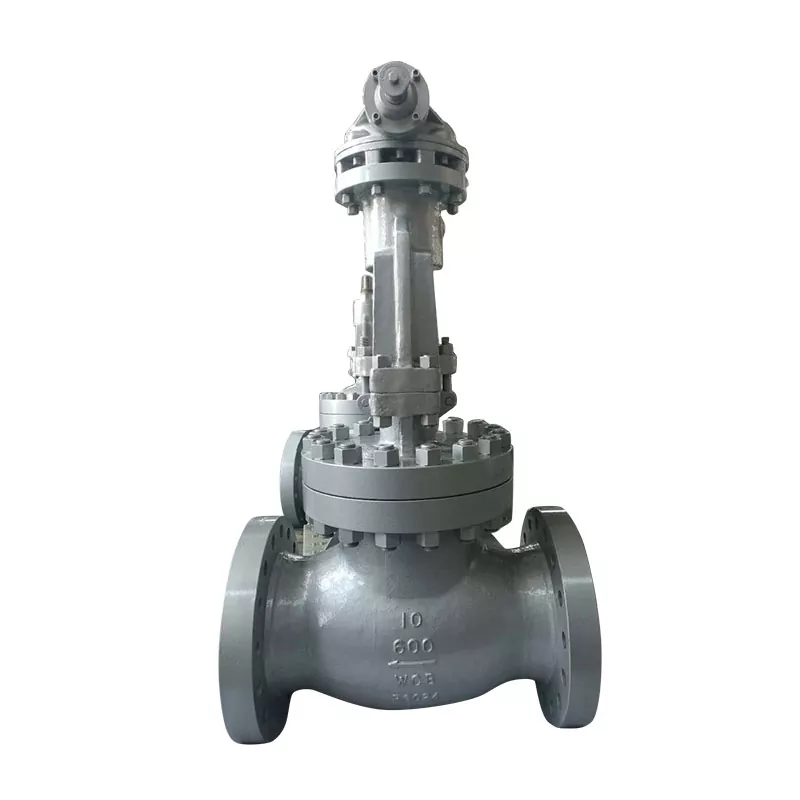
Table of Contents
- What Are API Globe Valves?
- How Do API Globe Valves Work?
- What Are the Key Features of API Globe Valves?
- Which Materials Are Used in API Globe Valves?
- Where Are API Globe Valves Commonly Used?
- How Should You Select the Right API Globe Valve?
- What Makes Hanno a Reliable API Globe Valve Manufacturer?
- What Can a Real Industrial Application Demonstrate?
- FAQ About API Globe Valves
What Are API Globe Valves?
API Globe Valves are linear-motion industrial valves designed to start, stop, and regulate fluid flow. Unlike valves intended primarily for full-open or full-closed service, globe valve construction allows the disc to move toward or away from a stationary seat, making the valve suitable for applications where flow adjustment is required.
The design generally consists of a valve body, bonnet, stem, disc, seat, packing, gasket, and related fastening components. The controlled movement of the disc changes the flow passage through the valve, allowing operators to manage fluid conditions while maintaining a reliable sealing interface.
For industrial procurement, standards and manufacturing consistency are particularly important. According to Hanno's product information, its API Globe Valves are designed and manufactured in accordance with API 600 or API 602 requirements, while pressure testing is performed according to API 598.
For buyers comparing different valve configurations, it is useful to review the manufacturer's globe valve product range together with project pressure, temperature, media, and installation requirements.
How Do API Globe Valves Work?
The operating principle of an API Globe Valve is relatively straightforward. Turning the handwheel or activating the actuator moves the stem, which in turn moves the disc along a linear path. As the disc approaches the seat, the flow passage becomes smaller. When the disc contacts the seat, the valve reaches its closed position.
This controlled movement gives globe valves an important advantage in applications requiring throttling. Instead of simply providing an open or closed flow path, the valve can be positioned at intermediate points to influence flow conditions.
- Opening: The stem lifts or moves the disc away from the seat, increasing the flow passage.
- Regulation: Intermediate disc positions allow operators to control the flow rate.
- Closing: The disc moves toward the seat to restrict and ultimately stop flow.
- Sealing: Properly machined disc and seat surfaces help minimize fluid bypass when closed.
Because the flow path creates a pressure drop, globe valves should be selected according to the process requirements rather than simply by nominal pipe size.
What Are the Key Features of API Globe Valves?
A high-quality API Globe Valve needs more than a suitable body shape. Material selection, machining accuracy, sealing performance, manufacturing controls, and testing all influence long-term reliability.
| Feature | Industrial Value | Why It Matters |
|---|---|---|
| API-oriented design | Supports standardized engineering requirements | Helps simplify project specification and procurement |
| Precision disc and seat | Improves shut-off performance | Helps reduce unwanted fluid bypass |
| Controlled casting | Supports consistent valve-body quality | Important for demanding pressure-service applications |
| Manual, gear or actuated operation | Provides installation flexibility | Allows adaptation to different operating conditions |
| Pressure testing | Verifies pressure-retention performance | Provides an additional quality-control checkpoint |
Hanno states that its production approach includes an in-house foundry, precision-machined sealing components, and 100% pressure testing according to API 598. The company also reports having more than 32 senior technicians supporting production and technical activities.
Which Materials Are Used in API Globe Valves?
Material selection should always be based on the medium, pressure, temperature, corrosion conditions, and applicable project specifications. API Globe Valves may use carbon steel, alloy steel, stainless steel, and other engineered materials depending on the service environment.
For example, the Hanno product specification lists ASTM A216-WCB for the body and bonnet, ASTM A105 with 13Cr for the disc, ASTM A182-F6a for the stem and gland components, steel and graphite for the gasket, and graphite packing.
| Component | Example Material | Function |
|---|---|---|
| Body | ASTM A216-WCB + STL | Main pressure-containing structure |
| Disc | ASTM A105 + 13Cr | Controls the flow opening and sealing interface |
| Stem | ASTM A182-F6a | Transfers operating movement to the disc |
| Gasket | Steel + Graphite | Helps seal the body/bonnet connection |
| Packing | Graphite | Helps reduce leakage around the stem |
For high-temperature applications, Hanno also identifies materials such as WC6 and WC9 as options for demanding steam-service environments. Final material selection should be confirmed against the actual process conditions and project specifications.
Where Are API Globe Valves Commonly Used?
The ability to combine flow regulation with shut-off makes API Globe Valves valuable across several process industries. Their application should be determined by pressure class, temperature range, fluid characteristics, cycle frequency, and the required flow-control function.
- Petrochemical plants: Used in process and refining systems for controlling crude oil, refined products, and other process media.
- Power generation: Applied in steam and utility systems where pressure and temperature can be demanding.
- Metallurgical facilities: Suitable for industrial cooling and process circuits where reliable repeated operation is required.
- Pharmaceutical facilities: Can be applied to utility systems requiring controlled and reliable shut-off.
- General process industries: Useful wherever controlled fluid movement and dependable isolation are required.
The Hanno product page specifically identifies petrochemical, power-generation, and pharmaceutical applications for its API Globe Valves.
How Should You Select the Right API Globe Valve?
Choosing an industrial valve based only on nominal diameter can create unnecessary operational risks. A procurement team should evaluate the complete operating environment before placing an order.
- Define the medium: Identify whether the valve will handle water, steam, hydrocarbons, chemicals, or another process fluid.
- Confirm pressure and temperature: These parameters directly influence body and trim material selection.
- Determine the required control function: Decide whether the primary requirement is isolation, throttling, or frequent flow adjustment.
- Review material compatibility: Verify that body, disc, stem, packing, gasket, and trim materials suit the process medium.
- Check applicable standards: Confirm the required API, testing, inspection, documentation, and project specifications.
- Consider operation: Manual, gearbox, or actuated configurations should be selected according to valve size, accessibility, frequency, and automation requirements.
- Verify documentation: For major projects, request relevant inspection records, material documentation, and pressure-test certificates.
For international buyers looking for a China valve manufacturer, evaluating manufacturing capability and quality-control procedures alongside price can provide a more reliable basis for supplier selection.
What Makes Hanno a Reliable API Globe Valve Manufacturer?
Supplier capability is an important part of valve procurement because manufacturing consistency can directly affect product reliability. Hanno reports more than 25 years of experience manufacturing API Globe Valves and operates an in-house foundry for valve-body casting.
Its manufacturing information highlights several factors relevant to industrial buyers:
- More than 25 years of API Globe Valve manufacturing experience.
- An in-house foundry for greater control over casting production.
- An approximately 18,000 m² production area stated on the product page.
- More than 32 senior technicians.
- 100% pressure testing according to API 598, according to the manufacturer's stated quality process.
- Material Test Reports and pressure-test certificates according to EN 10204 3.1 for shipments, according to Hanno.
- Manual, gear-operated, and actuated configurations to accommodate different operating requirements.
These capabilities can be particularly valuable for EPC contractors, distributors, plant operators, and industrial valve buyers who need traceability and repeatable manufacturing rather than simply a low purchase price.
What Can a Real Industrial Application Demonstrate?
A practical installation can reveal how valve construction performs under actual operating conditions. Hanno reports a case involving a heavy-duty steel mill in Southeast Asia that installed 150 API Globe Valves in a furnace cooling-water circuit.
According to the manufacturer, the project required high-cycle durability. After three years of operation, the valves reportedly maintained sealing integrity without seat replacement. Hanno attributes the result in part to the precision casting produced through its own foundry.
While individual results cannot replace project-specific engineering validation, this type of application demonstrates why buyers should evaluate manufacturing process, material control, testing, and field requirements together when selecting industrial valves.
FAQ About API Globe Valves
What is an API Globe Valve used for?
An API Globe Valve is primarily used to start, stop, and regulate fluid flow. Its linear-motion disc and seat arrangement make it particularly suitable for applications where controlled throttling and reliable shut-off are required.
Are API Globe Valves suitable for high-pressure applications?
They can be suitable for high-pressure industrial service when the valve is correctly engineered and selected for the required pressure class, temperature, medium, materials, and applicable standards. Always verify the final operating conditions with the manufacturer.
What standards are associated with Hanno API Globe Valves?
Hanno states that its API Globe Valves are designed and manufactured in accordance with API 600 or API 602 requirements and undergo pressure testing according to API 598.
What materials can be used for API Globe Valves?
Material configurations vary according to service requirements. Hanno's listed configuration includes ASTM A216-WCB, ASTM A105, ASTM A182-F6a, 13Cr, graphite, and other specified materials. Higher-temperature applications may require alloy materials such as WC6 or WC9.
What is the typical lead time for large API Globe Valve orders?
Hanno states that large-scale orders typically require approximately 30–45 days, depending on material specifications and production requirements. Buyers should confirm the actual delivery schedule when requesting a quotation.
Conclusion
API Globe Valves remain an important solution for industrial systems that require dependable shut-off, controlled flow, and robust performance under demanding conditions. The right valve should be selected through a combination of application analysis, material compatibility, applicable API requirements, manufacturing capability, testing, and documentation. With more than 25 years of manufacturing experience, an in-house foundry, and a product range designed for demanding industrial applications, Hanno provides an option for buyers seeking a professional China API Globe Valves manufacturer and supplier. If you are planning a new project, replacing existing valves, or sourcing API-compliant flow-control equipment, contact us to discuss your specifications, material requirements, operating conditions, and quotation needs.