Free Forging Process of Inconel 600 Check Valve
Inconel 600 is a nickel-chromium alloy known for its good high-temperature oxidation resistance, corrosion resistance, and stable mechanical properties. Due to these characteristics, it is widely used in demanding industrial environments such as chemical processing equipment, heat treatment systems, and high-temperature piping applications.
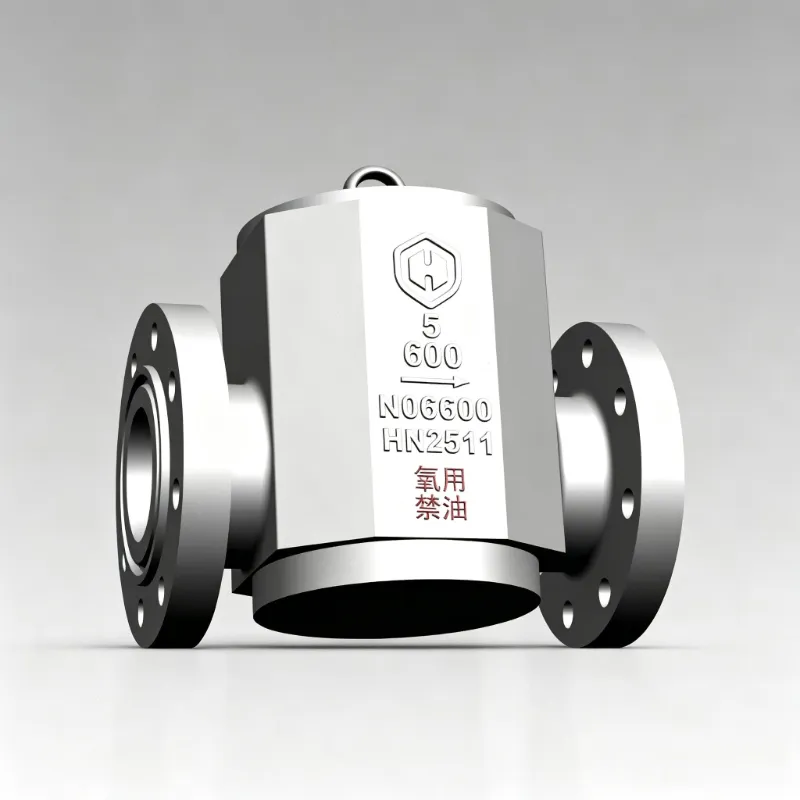
An Inconel 600 check valve is designed to prevent reverse flow in pipeline systems and maintain the correct flow direction of the medium. For applications involving elevated temperatures or corrosive environments, the valve body requires reliable material performance and structural integrity. Free forging is commonly used for manufacturing high-alloy valve components because it can improve material density and optimize the internal metal structure.
Characteristics of Inconel 600 Material for Valve Forging
Inconel 600 mainly consists of nickel, chromium, and iron. The high nickel content provides corrosion resistance, while chromium improves oxidation resistance in high-temperature conditions. However, compared with conventional steels, nickel-based alloys have different forging characteristics that require careful process control.
High Resistance to Deformation
Inconel 600 has relatively high deformation resistance during hot working. Proper forging temperature control is necessary to reduce forging loads and ensure uniform deformation throughout the material.
Low Thermal Conductivity
Because nickel-based alloys have lower thermal conductivity compared with many steel materials, the heating process requires controlled temperature increases to reduce thermal stress caused by uneven heating.
Requirements for Uniform Forging
As a pressure-containing component, the valve body requires good structural continuity. Proper free forging operations help refine the internal structure and improve the overall consistency of the forged part.
Manufacturing Process of Inconel 600 Check Valve by Free Forging
1. Raw Material Inspection and Preparation
Before forging, Inconel 600 raw materials are inspected to confirm material grade, chemical composition, and surface quality. Qualified materials are then cut according to the required forging dimensions, leaving sufficient machining allowance for subsequent processes.
| Inspection Item | Purpose |
|---|---|
| Chemical Composition Analysis | Verify alloy elements meet material requirements |
| Ultrasonic Testing | Detect possible internal defects |
| Dimension Inspection | Confirm raw material size before forging |
| Surface Inspection | Check for visible cracks or surface defects |
2. Heating Process
Before free forging, the Inconel 600 billet is heated under controlled conditions to achieve suitable plasticity for deformation. The heating process must ensure uniform temperature throughout the material while avoiding excessive holding time at high temperatures.
Important considerations during heating include:
- Controlled heating rate to reduce thermal stress.
- Uniform temperature distribution inside the billet.
- Avoiding excessive grain growth caused by prolonged heating.
3. Free Forging and Shape Forming
The free forging process gradually forms the basic shape of the Inconel 600 check valve body through multiple deformation operations. Unlike die forging, free forging uses general forging tools and provides greater flexibility for large or customized components.
Upsetting
Upsetting compresses the billet along its axial direction, increasing the cross-sectional area and improving material compactness. This operation helps reduce internal looseness and improves the forged structure.
Drawing Out
Drawing out changes the length and cross-sectional shape of the billet. Proper control of deformation helps create a continuous metal flow pattern inside the forged valve body.
Punching and Hole Expansion
For check valve bodies with internal flow passages, punching and hole expansion operations can be used to create the basic internal structure while maintaining machining allowance for final processing.
Final Forging Adjustment
After several forging operations, the forged body is adjusted to achieve the required overall shape and dimensions before machining.
Heat Treatment After Forging
After free forging, Inconel 600 check valve forgings usually undergo heat treatment to improve structural stability and relieve residual stresses generated during deformation.
The main purposes of heat treatment include:
- Improving structural uniformity.
- Reducing residual stress from forging.
- Enhancing stability during service conditions.
The specific heat treatment process depends on product requirements, material condition, and application environment.
Machining Process of Forged Valve Body
After forging and heat treatment, the Inconel 600 valve body requires precision machining to achieve the designed dimensions and sealing performance.
Typical machining operations include:
- Valve body external machining.
- Flow passage machining.
- Sealing surface machining.
- Connection end machining.
- Final dimensional processing.
Since Inconel 600 is considered a difficult-to-machine alloy, suitable cutting tools and optimized machining parameters are required to maintain processing efficiency and surface quality.
Quality Inspection of Inconel 600 Forged Check Valve
As a pressure-bearing valve component, an Inconel 600 check valve requires strict quality inspection throughout manufacturing.
Chemical Composition Testing
Chemical analysis is performed to confirm that the material composition meets the requirements of Inconel 600 alloy specifications.
Non-Destructive Testing
Common non-destructive testing methods include:
- Ultrasonic Testing (UT)
- Liquid Penetrant Testing (PT)
These inspections help identify internal discontinuities and surface defects.
Dimensional Inspection
Critical dimensions of the forged valve body are checked according to engineering drawings to ensure proper assembly and operation.
Pressure Testing
The completed check valve is pressure tested to verify pressure resistance and sealing performance before delivery.
Advantages of Free Forging for Inconel 600 Check Valve Manufacturing
Improved Material Utilization
Free forging allows the material to approach the final valve body shape, reducing unnecessary machining allowance and improving material usage.
Better Internal Structure
The plastic deformation during forging helps improve material compactness and promotes a more continuous internal structure.
Suitable for Customized and Large Components
Because free forging is not limited by fixed molds, it provides flexibility for manufacturing special-size valve bodies and high-alloy components.
Conclusion
The free forging production of Inconel 600 check valves involves multiple controlled processes, including raw material inspection, heating, forging, heat treatment, machining, and final testing. Each stage influences the quality and service reliability of the finished valve.
Through proper forging process control, Inconel 600 check valves can fully utilize the advantages of nickel-based alloy materials and provide stable performance for high-temperature, corrosive, and demanding industrial applications.