Why Are Handwheel Gate Valves Still a Reliable Choice for Industrial Pipeline Isolation
Abstract: Handwheel Gate Valves remain a practical solution for pipeline isolation because they combine a straightforward mechanical structure, manual operation, stable sealing, and broad application flexibility. Hanno provides durable valve solutions designed for industrial and civil pipeline systems, with material configurations and manufacturing capabilities suited to demanding service environments. This guide explains how Handwheel Gate Valves work, their key advantages, installation requirements, maintenance practices, and the factors buyers should consider when selecting a reliable valve supplier.
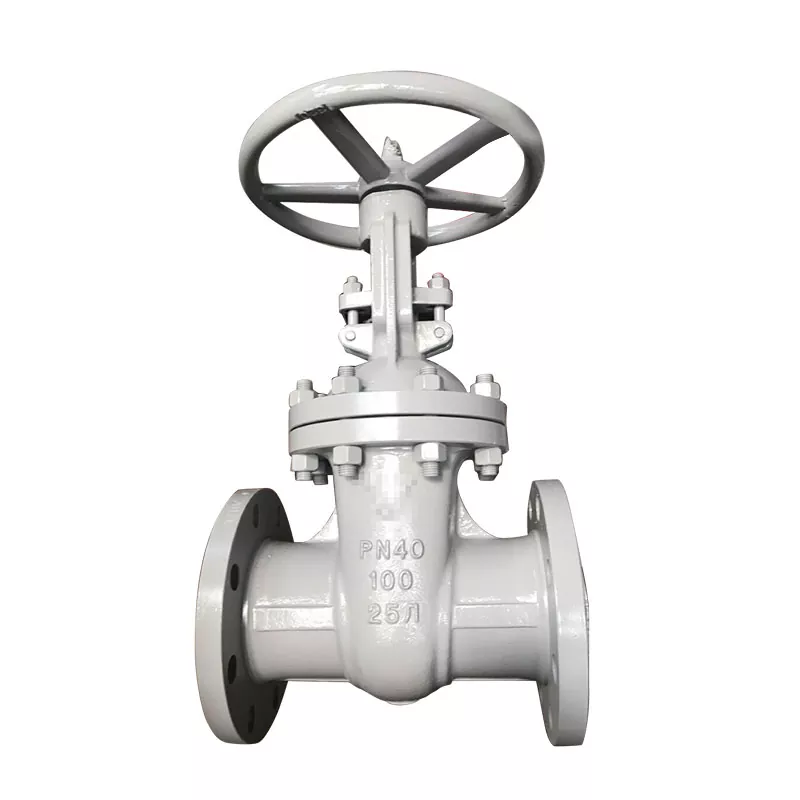
Table of Contents
- What Are Handwheel Gate Valves?
- How Do Handwheel Gate Valves Work?
- What Are the Key Benefits?
- Which Materials Are Commonly Used?
- Where Are Handwheel Gate Valves Used?
- How Should You Select the Right Valve?
- What Are the Installation and Maintenance Requirements?
- How Do Handwheel Gate Valves Compare with Other Options?
- Frequently Asked Questions
What Are Handwheel Gate Valves?
Handwheel Gate Valves are manually operated isolation valves that use a rotating handwheel to move a valve stem and raise or lower a gate. When the gate is lifted away from the seat, the pipeline is opened and the medium can pass through. When the gate moves into close contact with the seat, the passage is shut off.
Unlike control valves designed for continuous flow adjustment, gate valves are primarily intended for fully open or fully closed service. This operating principle makes them particularly useful where reliable pipeline isolation is more important than throttling capability.
According to Hanno's product information, its Handwheel Gate Valves feature a relatively simple construction and manual operating method, making them suitable for various industrial and civil applications.
How Do Handwheel Gate Valves Work?
The operating principle is relatively straightforward. Turning the handwheel converts rotary movement into linear movement of the stem. The stem then moves the gate vertically until the gate reaches the required open or closed position.
- Handwheel rotation: The operator turns the handwheel manually.
- Stem movement: The stem moves according to the rotation direction.
- Gate movement: The gate travels upward or downward inside the valve body.
- Flow isolation: The gate separates from or contacts the valve seat.
- Final position: The valve remains fully open or fully closed during normal service.
For standard operation, Hanno specifies clockwise rotation for closing and counterclockwise rotation for opening. The company's product guidance also emphasizes that gate valves should not be used for throttling.
What Are the Key Benefits of Handwheel Gate Valves?
The continuing popularity of Handwheel Gate Valves is largely associated with their mechanical simplicity and dependable isolation function. For facilities where electrical or pneumatic actuation is unnecessary, manual operation can also reduce system complexity.
| Advantage | Why It Matters | Typical Buyer Benefit |
|---|---|---|
| Simple construction | Fewer complicated operating components | Convenient inspection and maintenance |
| Manual operation | No external power source is normally required | Useful for isolated or backup pipeline systems |
| Full-bore isolation | Gate moves clear of the flow path when fully open | Suitable for pipeline shut-off applications |
| Stable sealing | Gate and seat create the shut-off interface | Supports reliable isolation when properly selected |
| Broad applicability | Available in different materials and configurations | Adaptable to diverse industrial environments |
Hanno describes its Handwheel Gate Valves as offering a simple structure, manual control, stable sealing performance, and suitability for a wide range of applications.
Which Materials Are Commonly Used?
Material selection has a direct influence on valve durability, sealing performance, corrosion resistance, and suitability for different media and operating conditions. Therefore, buyers should evaluate the complete material specification rather than selecting a valve based only on nominal size.
For example, Hanno's published Handwheel Gate Valve configuration lists a 25L body, 13Cr seat surface, 2Cr13 stem, 304 plus graphite gasket, expanded graphite packing, GCr15 bearings, brass stem nut, and QT400 handwheel.
| Component | Example Material | Functional Role |
|---|---|---|
| Body | 25L | Main pressure-containing structure |
| Seat Surface | 13Cr | Supports sealing at the gate-seat interface |
| Stem | 2Cr13 | Transfers handwheel movement to the gate |
| Gasket | 304 + Graphite | Helps maintain bonnet sealing |
| Packing | Expanded Graphite | Supports stem sealing |
| Handwheel | QT400 | Provides manual operating interface |
For actual procurement, the final material specification should always be verified against the project's pressure, temperature, medium, corrosion conditions, applicable standards, and approved valve drawing.
Where Are Handwheel Gate Valves Used?
Because they are primarily isolation devices, Handwheel Gate Valves can be incorporated into many pipeline systems where operators need a straightforward method of stopping or restoring flow.
- Petroleum and refining: Pipeline isolation and process-system shut-off.
- Chemical processing: Isolation of compatible process and utility lines.
- Power generation: Supporting isolation in water, steam, and utility systems.
- Water and wastewater: Main-line and equipment isolation.
- Industrial manufacturing: Manual isolation of process pipelines.
- General civil systems: Applications where manual pipeline shut-off is sufficient.
Hanno's broader gate valve range is positioned for industries including petroleum, chemical, pharmaceutical, fertilizer, power generation, water and wastewater, marine, metallurgy, and energy applications.
How Should You Select the Right Valve?
Choosing a Handwheel Gate Valve should begin with the operating conditions rather than price alone. A technically appropriate valve can improve service reliability and reduce maintenance risks over the equipment's operating life.
- Determine nominal size: Match the valve size with the pipeline and connection requirements.
- Confirm pressure rating: Select a pressure class appropriate for the system's maximum operating conditions.
- Evaluate temperature: Consider both normal and maximum/minimum operating temperatures.
- Identify the medium: Check compatibility with water, oil, gas, chemicals, steam, or other media.
- Choose the body and trim materials: Consider corrosion, erosion, temperature, and mechanical requirements.
- Verify connection type: Confirm whether flanged, butt-welded, threaded, or another connection is required.
- Check operating torque: Large valves or high differential pressure may require a gearbox rather than direct manual operation.
- Confirm applicable standards: Review project specifications and required design, testing, and certification standards.
This last point is particularly important for industrial procurement. Hanno also manufactures gearbox-operated gate valves for larger valves where direct handwheel operation may require excessive manual effort. Its published gearbox gate valve range covers DN150–DN1400 and pressure classes up to Class 2500.
What Are the Installation and Maintenance Requirements?
Correct installation is essential for maintaining sealing performance and reducing unnecessary operating problems. Before installation, the valve chamber and sealing surfaces should be cleaned to remove dirt, sand, and other contaminants.
Installation Checklist
- Verify the valve model and connection dimensions.
- Confirm the required installation orientation.
- Clean sealing surfaces before assembly.
- Tighten connection bolts evenly.
- Check packing compression without preventing smooth stem movement.
- Leave sufficient clearance for handwheel operation and maintenance.
- Follow the manufacturer's instructions for valves equipped with transmission mechanisms.
Hanno specifically recommends avoiding collisions or improper handling of handwheels and maintaining adequate space for operation. For frequently operated valves, its guidance recommends lubrication at least once a month.
Regular inspection should also focus on packing condition, stem movement, leakage, handwheel integrity, flange connections, and unusual operating resistance. If excessive force is required, operators should investigate the cause instead of using extension bars or other makeshift tools.
How Do Handwheel Gate Valves Compare with Other Options?
The best valve type depends on the intended function. Handwheel Gate Valves are particularly appropriate when the main requirement is reliable manual isolation rather than continuous flow regulation.
| Valve Type | Primary Function | Typical Operating Method | Best Suited For |
|---|---|---|---|
| Handwheel Gate Valve | Isolation | Manual handwheel | Fully open/fully closed pipeline service |
| Globe Valve | Flow control and isolation | Manual or actuated | Applications requiring flow regulation |
| Check Valve | Prevent reverse flow | Automatic | Backflow prevention |
| Gearbox Gate Valve | Isolation | Handwheel with gearbox | Larger valves requiring mechanical advantage |
A gate valve should therefore not be selected simply because it is inexpensive or familiar. The critical question is whether the valve's operating principle matches the actual pipeline function.
Frequently Asked Questions About Handwheel Gate Valves
1. What are Handwheel Gate Valves mainly used for?
They are primarily used to fully open or fully close pipeline flow. They are not normally intended for throttling or continuous flow regulation.
2. Can Handwheel Gate Valves be operated without electricity?
Yes. A standard handwheel-operated configuration uses manual mechanical operation and therefore does not normally require an external electrical power source.
3. Which way do you turn a handwheel to close a gate valve?
For the Hanno configuration, clockwise rotation closes the valve and counterclockwise rotation opens it. Always confirm the operating instructions supplied with the specific valve.
4. Can a gate valve be used for throttling?
No. Gate valves are generally designed for fully open or fully closed service. Using them for throttling can contribute to undesirable flow conditions and premature wear.
5. How often should a frequently operated handwheel gate valve be lubricated?
Hanno recommends lubrication at least once a month for valves that are frequently opened and closed, while actual maintenance intervals should also reflect service conditions and the manufacturer's maintenance instructions.
6. When should I choose a gearbox-operated gate valve?
A gearbox configuration can be considered when valve size, differential pressure, or operating torque makes direct handwheel operation impractical. Hanno specifically positions gearbox gate valves for applications where additional mechanical advantage is required.
Conclusion: Are Handwheel Gate Valves a Smart Choice for Pipeline Isolation?
For pipeline systems that require dependable shut-off rather than continuous flow regulation, Handwheel Gate Valves remain a practical and versatile choice. Their straightforward mechanical structure, manual operation, stable sealing interface, and adaptable material configurations make them suitable for many industrial and civil applications. Selecting the correct size, pressure rating, material, connection, and operating configuration is essential for long-term performance. If you are sourcing reliable Handwheel Gate Valves from a China manufacturer or need help matching a valve to your pipeline requirements, contact us at Hanno for product specifications, technical guidance, and a quotation tailored to your project.