Why Does Heat Dissipation Matter in High Temperature Gate Valves?
When a gate valve is installed in a high-temperature pipeline, the valve body is not the only part exposed to heat. Heat from the process medium can travel through the valve body, bonnet, stem, and packing area. As the operating temperature increases, components that normally work without problems may experience higher temperatures, thermal expansion, and changes in operating resistance.
That is why heat dissipation matters in a high temperature gate valve. It is not simply about making the valve cooler. In practical service, heat management helps control how heat travels through the valve, particularly around the stem and packing area, so the valve can maintain more predictable operation and sealing performance under high-temperature conditions.
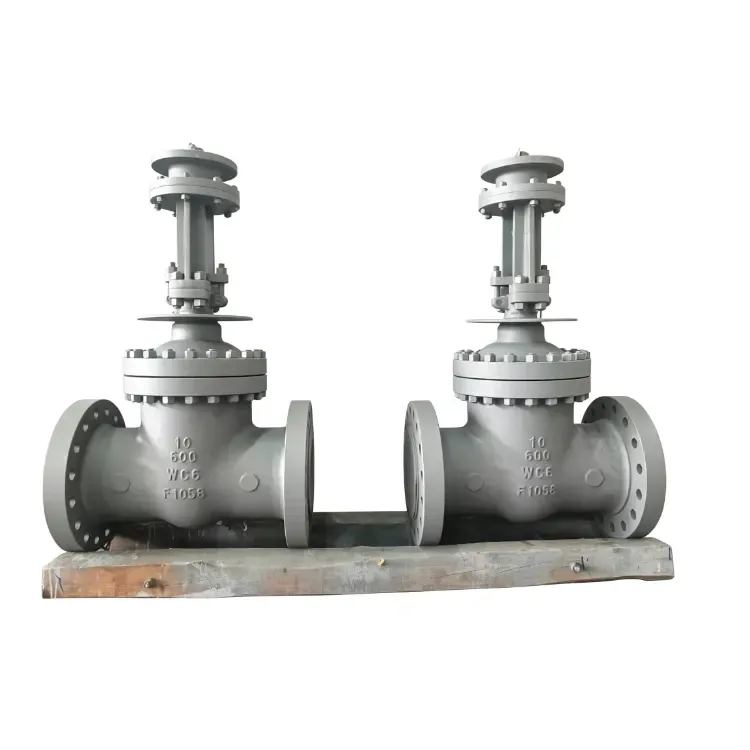
Where Does Heat Go in a High Temperature Gate Valve?
A simple way to understand the issue is to look at how heat moves through the valve.
The hot medium first transfers heat to the valve body. From there, heat can conduct toward the bonnet and stem. When the operating temperature is high, the upper sections of the valve may also become significantly hotter.
However, the temperature is not necessarily the same throughout the entire valve. Areas closer to the hot medium normally experience a greater thermal load, while areas farther away can remain relatively cooler.
| Valve Area | Main Concern at High Temperature |
|---|---|
| Valve Body | Direct exposure to the hot medium |
| Gate and Internal Parts | Thermal expansion and material compatibility |
| Bonnet | Heat transfer toward upper components |
| Stem | Temperature rise and thermal expansion |
| Packing Area | Sealing condition at elevated temperature |
| Operating Area | Heat transfer toward accessible components |
For this reason, selecting a high temperature gate valve should involve more than simply checking the maximum temperature of the valve body.
Why Can Excessive Heat Cause Problems?
One of the first issues to consider is thermal expansion.
Different valve components expand when heated. As the temperature changes, the original clearances and contact conditions between components can also change.
For example, a valve may operate normally during installation and commissioning but require noticeably more operating force after reaching its working temperature. In a gate valve, the interaction between the stem, gate, seats, and other components can be affected by temperature changes.
The packing area also deserves attention.
The stem needs to move through the packing while maintaining a seal around the stem. When the packing remains exposed to elevated temperatures for extended periods, its operating condition may be affected depending on the packing material and valve design.
This is why a high temperature gate valve needs to be evaluated as a complete system rather than by looking only at the valve body and gate.
How Does Heat Dissipation Help?
Heat dissipation can be understood as a way of controlling heat transfer between different areas of the valve.
The goal is not to reduce the temperature of the process medium. Instead, the valve structure can be designed to prevent heat from being transferred too quickly or excessively to components that do not need to operate at the same temperature as the process medium.
Depending on the design, features such as an extended bonnet can increase the distance between the hot process area and the stem and packing area.
The purpose is practical: reduce unnecessary high-temperature exposure around the stem and packing while providing more space for heat to dissipate.
A Simple Example
Consider a gate valve installed on a high-temperature steam line.
If heat travels directly upward from the valve body, the stem and packing area can also become increasingly hot.
With a valve structure designed to manage heat transfer, the upper sealing area can be positioned farther away from the hottest zone. This gives heat more opportunity to dissipate before reaching these components.
The valve is still operating in a high-temperature environment, but the heat is being managed rather than simply transferred throughout the entire structure.
Why Is Heat Dissipation Related to Sealing?
Sealing in a high temperature gate valve is not simply a matter of whether the valve closes.
During actual operation, the valve may go through startup, heating, normal operation, shutdown, and reheating. As the temperature changes, valve components expand and contract.
The packing area is particularly important.
If packing remains exposed to excessive temperatures, its operating condition may be affected. The actual effect depends on the packing material, construction, and operating conditions.
For this reason, when selecting a high temperature gate valve, it is useful to consider the complete sealing arrangement rather than focusing only on the valve's temperature rating.
What Should Be Checked?
- Operating temperature
- Operating pressure
- Process medium
- Valve body and internal component materials
- Stem and packing arrangement
- Bonnet design
- Thermal expansion
- Heat dissipation or heat isolation structure
- Expected temperature changes and thermal cycling
These factors are related to one another. A valve operating continuously at a stable high temperature may have different requirements from a valve that is repeatedly heated and cooled.
Why Does Bonnet Design Matter?
The bonnet is more than simply a cover for the valve body.
In a high temperature gate valve, bonnet design can influence how heat travels toward the stem and packing area.
For example, an extended bonnet can increase the distance between the hot process area and the upper sealing components. This additional distance gives heat more room to dissipate as it moves upward.
Of course, this does not mean that every high-temperature application requires exactly the same bonnet design. The appropriate construction depends on the operating temperature, pressure, process medium, valve design, and actual service conditions.
The important point is that the temperature around the stem and packing area does not necessarily equal the temperature of the process medium inside the pipeline.
What Problems Should Operators Watch For?
Some changes during actual operation can provide useful clues when evaluating a valve working at high temperature.
For example, a valve may operate normally during commissioning but become noticeably harder to open or close after reaching its operating temperature. The packing area may also require more frequent adjustment.
These symptoms do not automatically mean that heat dissipation is the cause. Stem wear, packing condition, installation issues, thermal expansion, and other operating factors can produce similar symptoms.
However, when the valve operates continuously at high temperature, temperature should be included in the troubleshooting process.
Practical Inspection Points
| Observed Condition | Areas to Check |
|---|---|
| Valve becomes difficult to operate after heating | Stem condition, thermal expansion, and packing |
| Packing requires frequent adjustment | Packing condition and operating temperature |
| Sealing changes after heating | Thermal expansion and sealing arrangement |
| Upper valve area becomes excessively hot | Heat transfer and thermal design |
| Problems appear after repeated thermal cycles | Component expansion, contraction, and condition |
Where practical, measuring temperatures at different points around the valve can also provide useful information when investigating an operating issue.
Heat Resistance and Heat Dissipation Are Not the Same
These two terms are often mentioned together, but they address different issues.
Heat resistance is mainly concerned with whether the valve materials and components can withstand the specified operating temperature.
Heat dissipation concerns how heat is transferred and distributed through the valve structure.
A valve may use materials suitable for high-temperature service, but that does not mean every component needs to remain at the same temperature as the process medium.
This distinction is particularly relevant to the packing, stem sealing, and other components located away from the hottest part of the flow path.
When Should Heat Dissipation Receive More Attention?
Heat dissipation generally becomes more important as operating temperature increases, but temperature alone does not determine the requirements.
It is particularly worth considering in applications such as:
- High-temperature steam systems
- Power generation equipment
- Refining and petrochemical processes
- High-temperature process pipelines
- Systems with frequent heating and cooling cycles
- Applications where valve operation and sealing stability are important
The actual valve construction should always be selected according to the specific operating temperature, pressure, process medium, and operating conditions.
What Should You Look at When Selecting a High Temperature Gate Valve?
When sourcing a high temperature gate valve, one of the first questions is often:
“What temperature can the valve withstand?”
That is an important question, but it is not the only one.
A more practical evaluation considers the complete operating environment. What is the normal operating temperature? What is the pressure? What medium is being handled? Does the system operate continuously at high temperature, or does it frequently heat up and cool down? Where is the valve installed? How is heat managed around the stem and packing area?
Looking at these factors together provides a better basis for determining whether a high temperature gate valve is suitable for a particular service.
The Practical Takeaway
For high temperature gate valves, heat resistance determines whether the valve can withstand the operating environment, while heat management helps control how that heat affects different valve components.
When the application involves high temperatures, it is therefore worth looking beyond the temperature rating and considering the valve's overall thermal design, sealing arrangement, bonnet construction, and expected operating conditions.