API Gate Valve Casting Guide: What You Should Know About Valve Body Casting Before Production
When people talk about gate valves, they usually focus on the visible parts — the handwheel, stem, gate, or sealing structure. However, the performance of a gate valve is often determined by a component that users rarely see: the valve body.
The valve body is the pressure-containing shell of the valve. It connects with pipelines, supports internal components, and withstands the pressure and temperature changes during operation.
In industrial applications such as oil and gas, power plants, chemical processing, and pipeline systems, a small problem inside a valve casting can become a serious issue after years of operation.
This is why API Gate Valve Casting is not simply a metal forming process. It is a combination of material science, casting technology, heat treatment, machining, and quality inspection.
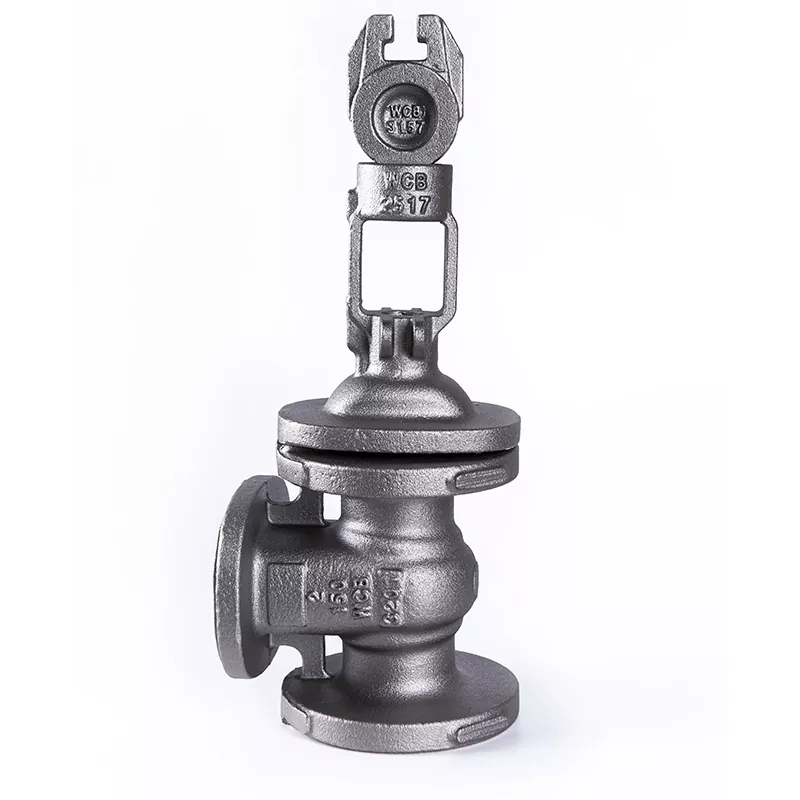
Why Are Gate Valve Bodies Usually Made by Casting?
A gate valve body looks like a simple housing, but its internal structure is actually quite complex.
Inside the valve body are:
Flow passages;
Gate movement areas;
Pressure-bearing walls;
Flange connection sections;
Sealing surfaces.
Producing such a structure from a solid piece of metal would require extensive machining, which increases material waste and manufacturing time.
Casting allows manufacturers to create a near-final valve body shape first, then use machining processes to finish critical areas.
This manufacturing method provides several advantages:
Suitable for complex geometries;
Better material utilization;
More efficient for large valve production;
Easier production of large-size valve bodies.
A simple way to understand it:
Casting creates the structure, while machining creates the precision.
Both processes are important.
The Hidden Challenges Behind Valve Body Casting
Many people think that if a casting looks smooth outside, it is a good casting.
In reality, some of the most important quality factors are hidden inside the metal.
Internal Defects: The Problem You Cannot See
During casting, molten metal changes from liquid to solid. If this process is not properly controlled, internal defects may appear.
Common casting issues include:
Porosity
Porosity refers to small holes or air pockets inside the metal.
Although a casting may look normal externally, internal pores can reduce:
Mechanical strength;
Pressure resistance;
Long-term reliability.
For pressure-containing components such as valve bodies, controlling porosity is extremely important.
Shrinkage Cavities
Metal naturally contracts during cooling.
If the feeding system is not properly designed, empty spaces may form inside the casting.
These defects can affect the ability of the valve body to withstand operating pressure.
Non-Metallic Inclusions
Foreign materials trapped inside the metal structure may affect mechanical properties.
For this reason, professional casting production requires strict control of melting, pouring, and cleaning processes.
Common Casting Methods
Different valve designs and applications may require different casting methods.
Sand Casting
Sand casting is one of the most widely used methods for industrial valve bodies.
Advantages:
Suitable for large valve sizes;
Flexible design options;
Cost-effective for many industrial applications.
It is commonly used for:
Oil pipeline valves;
Large industrial valves;
Power plant equipment.
Investment Casting
Investment casting provides higher dimensional accuracy compared with traditional sand casting.
It is suitable for:
Smaller valve components;
Complex shapes;
Applications requiring better surface finish.
Lost Foam Casting
Lost foam casting uses a foam pattern that disappears during the casting process.
This method can help create complex internal structures and reduce machining requirements.
The suitable casting method depends on valve size, material, quantity, and performance requirements.
Why Material Selection Matters in API Gate Valve Casting
A valve body does not work in the same environment everywhere.
A valve used in a water system and a valve used in an oil pipeline may require completely different materials.
Common materials include:
|
Material |
Typical Application |
|
Carbon Steel |
General industrial pipelines and standard applications |
|
Stainless Steel |
Corrosive environments and chemical applications |
|
Alloy Steel |
High temperature and pressure applications |
|
Duplex Stainless Steel |
Harsh corrosion environments |
Material selection needs to consider:
Working temperature;
Pressure rating;
Fluid characteristics;
Corrosion conditions;
Service life requirements.
Choosing the wrong material may cause problems even if the casting process itself is excellent.
What Does API Standard Mean for Gate Valve Casting?
For industrial valves, API standards provide guidelines related to design, manufacturing, and testing.
Common standards related to gate valves include:
API 600
Often associated with steel gate valves used in petroleum and industrial applications.
It covers requirements related to valve design, materials, dimensions, and testing.
API 6D
Commonly used for pipeline valves, especially in oil and gas transportation systems.
These standards help manufacturers and buyers maintain consistent expectations for valve performance.
However, meeting a standard is not only about printing a certificate. The entire manufacturing process, from raw material control to final inspection, needs to be managed properly.
How Manufacturers Control API Gate Valve Casting Quality
A reliable valve casting requires multiple quality control steps.
Chemical Composition Testing
Before production, metal composition needs to be checked to ensure the material meets requirements.
Different alloy elements influence:
Strength;
Corrosion resistance;
Temperature performance.
Heat Treatment
Heat treatment helps improve the internal structure of the casting.
It can influence:
Hardness;
Toughness;
Mechanical properties.
Non-Destructive Testing (NDT)
Some defects cannot be found by visual inspection.
Common inspection methods include:
Ultrasonic testing;
Magnetic particle testing;
Liquid penetrant testing;
Radiographic testing.
These methods help identify internal or surface defects.
Dimensional Inspection
After machining, critical dimensions need to be checked.
This ensures proper assembly with:
Gates;
Stems;
Flanges;
Pipeline connections.
A Common Misunderstanding
Many buyers compare valve bodies mainly by appearance and price.
However, two castings that look similar may have very different internal quality.
The difference may come from:
Raw material control;
Foundry experience;
Casting process management;
Heat treatment;
Inspection methods.
For pressure equipment, the hidden quality inside the metal is often more important than the surface appearance.
Frequently Asked Questions
What is an API Gate Valve Casting?
API Gate Valve Casting refers to the casting process used to manufacture gate valve components, especially the valve body, according to industrial valve requirements and applicable API standards.
Why are gate valve bodies commonly manufactured by casting?
Because valve bodies usually have complex structures. Casting can create these shapes efficiently while reducing material waste and machining time.
What materials are commonly used for API gate valve castings?
Common materials include carbon steel, stainless steel, alloy steel, and duplex stainless steel. The choice depends on working conditions.
How can casting defects affect valve performance?
Defects such as porosity, shrinkage cavities, and inclusions may reduce strength, affect pressure resistance, and shorten service life.
Is casting quality more important than machining accuracy?
Both are important. Casting determines the internal structure and strength, while machining ensures proper assembly and sealing performance.