What Is the Key Difference Between a Gate Valve and a Globe Valve in Operation?
The key operational difference between a Gate Valve and a globe valve is the direction of motion of the closure element and the resulting flow path. A Gate Valve moves a gate perpendicular to the flow direction, so when the valve is fully open, the flow path is straight and unobstructed. A globe valve moves a plug or disc along the flow axis, forcing the fluid through a changing direction and a narrow seat. This single difference explains why Gate Valves are used for isolation and globe valves are used for throttling. It also explains why the two valves behave differently in pressure drop, wear, and maintenance. For a procurement team sourcing Gate Valves, understanding this operational difference is the basis for selecting the right valve for the duty.
This guide is written for buyers who need to compare Gate Valves and globe valves in operation and to specify the right valve for an isolation or control duty. It explains the flow path difference, the pressure drop consequence, the throttling and wear behavior, the decision criteria for Gate Valves, and the product parameters that a buyer should verify before ordering. The information is organized around the questions a procurement team should ask, and it includes the specification data and documentation that a reliable supplier should provide. Our factory at Zhejiang Hengnuo Valve Manufacturing Co., Ltd. manufactures Gate Valves for industrial isolation service, and the guidance below reflects the operational and procurement questions we address with our customers.
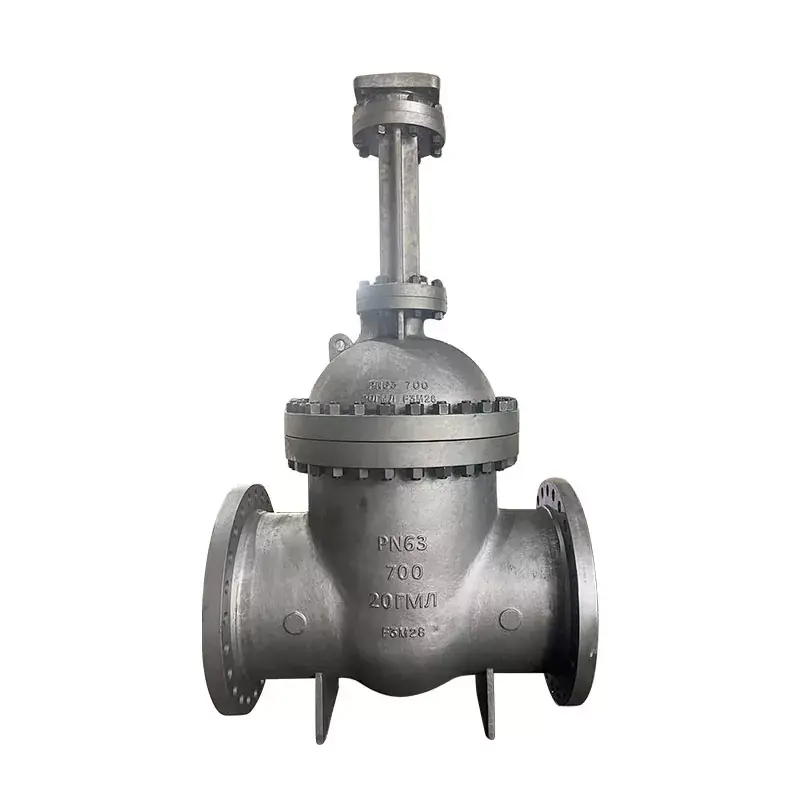
Table of Contents
- 1. What Is the Fundamental Operational Difference Between a Gate Valve and a Globe Valve?
- 2. Why Does the Flow Path Determine Pressure Drop and Pumping Energy?
- 3. How Does the Closing Mechanism Affect Throttling and Wear?
- 4. When Should Buyers Specify Gate Valves Instead of Globe Valves?
- 5. What Product Parameters Should a Buyer Verify Before Ordering Gate Valves?
- 6. Frequently Asked Questions (FAQ)
- 7. Conclusion
1. What Is the Fundamental Operational Difference Between a Gate Valve and a Globe Valve?
The fundamental operational difference is visible in the first moment of opening and closing. When a Gate Valve is opened, the gate lifts out of the flow path. The fluid passes through a straight bore with no change of direction. When the valve is fully open, the gate is retracted into the bonnet, and the pressure drop across the valve is close to the pressure drop of an equivalent length of pipe. When a globe valve is opened, the plug lifts off the seat, but the fluid still has to turn through the body and pass through the seat opening. Even at full open, the globe valve presents a resistance to flow that the Gate Valve does not. This is why Gate Valves are described as isolation valves and globe valves are described as regulating valves.
The timeline below traces the operating sequence of each valve from closed to open and back to closed.
- Gate Valve, closed to open: The handwheel turns, the stem rises, and the gate lifts slowly. For the first few turns, the flow path is still blocked. When the gate clears the bore, the flow becomes straight-through. The valve is designed to be either fully open or fully closed, not to be held at an intermediate position.
- Gate Valve, open to closed: The gate descends into the flow path. The final seating action is metal-to-metal or soft-seated, and the valve provides tight isolation when fully closed.
- Globe Valve, closed to open: The stem turns and the plug lifts off the seat. The flow begins as soon as the plug separates from the seat, and the flow rate can be adjusted by the plug position. The flow path is never straight, even at full open.
- Globe Valve, open to closed: The plug descends toward the seat. The final seating action is a controlled engagement, and the valve can be stopped at any intermediate position to regulate flow.
The table below summarizes the operational difference in a procurement-friendly format.
| Operational Feature | Gate Valve | Globe Valve |
| Closure motion | Perpendicular to flow | Along the flow axis |
| Flow path at full open | Straight-through, unobstructed | Directional change through seat |
| Primary function | Isolation, on/off service | Throttling, flow regulation |
| Typical operating position | Fully open or fully closed | Any intermediate position |
| Pressure drop at full open | Very low | Relatively high |
At Zhejiang Hengnuo Valve Manufacturing Co., Ltd., our factory designs Gate Valves for isolation duty, with a straight-through bore and a seating design that provides tight shut-off. We do not position the Gate Valve as a throttling device, because the operational difference makes it unsuitable for that duty. The goal is to help buyers match the valve to the function, not to force one valve type into both roles.
2. Why Does the Flow Path Determine Pressure Drop and Pumping Energy?
The flow path determines pressure drop and pumping energy because every change of direction and every restriction in the flow path converts pressure energy into turbulence and heat. A Gate Valve, when fully open, presents a straight bore that is close to the pipe diameter. The pressure drop is low, and the pumping energy required to move the fluid through the valve is small. A globe valve, even when fully open, forces the fluid to turn through the body and pass through the seat opening. The pressure drop is higher, and the pumping energy is higher. In a large plant with many valves, the cumulative pressure drop can be significant, and the pumping cost can become a major operating expense.
The example below compares the pressure drop and pumping energy for the two valve types in a DN200 water line at a flow velocity of 2 m/s. The numbers are illustrative and are intended to show the order of magnitude, not to replace a project-specific calculation.
- Gate Valve, full open: The flow coefficient is high, and the pressure drop is approximately 0.2 to 0.5 kPa. The equivalent pipe length added by the valve is small. The pumping energy penalty is minimal.
- Globe Valve, full open: The flow coefficient is lower, and the pressure drop is approximately 5 to 15 kPa, depending on the body design. The equivalent pipe length is much higher. The pumping energy penalty is continuous and accumulates over the operating hours.
- Annual energy impact: For a continuously operated line, the difference in pressure drop can translate into a measurable difference in pump power. Over a year, the energy cost difference can be substantial, especially in high-flow or high-hour applications.
The table below provides a procurement-oriented comparison of the flow and pressure drop characteristics.
| Parameter | Gate Valve | Globe Valve |
| Flow coefficient (Cv) at full open | High, close to pipe Cv | Lower, typically 30-50% of Gate Valve |
| Pressure drop at full open | Very low | Relatively high |
| Flow path | Straight-through | Directional change |
| Pumping energy impact | Low in isolation service | Higher in continuous service |
| Best suited for | Isolation, infrequent operation | Throttling, frequent regulation |
At our factory, we provide the flow coefficient and pressure drop data for our Gate Valves so that buyers can calculate the system impact. We also advise buyers to compare the total cost of ownership, including pumping energy, when they are selecting between valve types. The goal is to make the procurement decision based on the operating cost, not only on the purchase price.
3. How Does the Closing Mechanism Affect Throttling and Wear?
The closing mechanism affects throttling and wear because the two valve types engage the seat in different ways. A Gate Valve is designed to seat only when it is fully closed. The gate travels through the body and engages the seat at the end of the stroke. If the gate is held at a partially open position, the flow passes through the narrow gap between the gate and the seat at high velocity. This high-velocity flow can cause erosion of the gate and the seat, and it can cause vibration that damages the stem and the packing. This is why Gate Valves are not recommended for throttling. A globe valve is designed for throttling. The plug moves along the flow axis, and the flow area is controlled by the plug-to-seat gap. The plug and seat are designed to withstand the velocity and the pressure drop at intermediate positions.
The maintenance record below illustrates the wear difference in a typical plant. The record is based on a plant that used both valve types in similar water service and tracked the maintenance events over a two-year period.
- Gate Valve used for isolation: The valve was operated only during planned shutdowns. After two years, the seat showed minor wear, and the packing required adjustment once. The gate and seat were still within the acceptance limits.
- Gate Valve used for throttling: The valve was used to regulate flow on a continuous basis. After two years, the gate and seat showed severe erosion, and the stem showed vibration damage. The valve required replacement of the gate and seat, and the packing required multiple adjustments.
- Globe Valve used for throttling: The valve was used to regulate flow on a continuous basis. After two years, the plug and seat showed normal wear, and the valve remained within the control accuracy requirement. The maintenance interval was predictable.
The table below summarizes the throttling and wear implications for procurement.
| Application | Gate Valve Suitability | Globe Valve Suitability | Wear Risk |
| Full open / full closed isolation | Excellent | Good | Low for Gate Valve |
| Frequent throttling | Not recommended | Excellent | High for Gate Valve |
| Occasional flow adjustment | Limited | Good | Moderate for Gate Valve |
| Continuous regulation | Not recommended | Excellent | Severe for Gate Valve |
At Hengnuo, our factory provides Gate Valves for isolation duty and advises buyers against using them for throttling. We also supply the seat and gate materials that match the isolation service, and we provide the maintenance guidance that helps buyers avoid the throttling wear problem. The goal is to make the valve last for its intended duty, not to force it into a duty for which it was not designed.
4. When Should Buyers Specify Gate Valves Instead of Globe Valves?
Buyers should specify Gate Valves instead of globe valves when the function is isolation, when the valve will be operated infrequently, when the pressure drop and pumping energy must be minimized, and when the line is large or the flow is high. Gate Valves are the standard choice for block valves on main process lines, for isolation of equipment during maintenance, and for on/off service where tight shut-off and low pressure drop are the priorities. A globe valve is the better choice when the function is throttling, when the flow rate must be adjusted frequently, and when the control accuracy is important. The decision tree below summarizes the choice for a procurement team.
- Is the primary function isolation? If yes, specify a Gate Valve. If the primary function is regulation, specify a globe valve.
- Will the valve be operated frequently at intermediate positions? If yes, a globe valve is the better choice. A Gate Valve should be operated fully open or fully closed.
- Is pressure drop and pumping energy a major operating cost? If yes, the Gate Valve's straight-through flow path is an advantage.
- Is the line size large or the flow high? If yes, the Gate Valve's lower pressure drop and lower actuator torque at full open are advantages.
- Is tight shut-off the priority? If yes, specify a Gate Valve with the appropriate seat design and leakage class.
The table below provides a procurement decision matrix for the two valve types.
| Duty Requirement | Recommended Valve | Reason |
| Main line isolation | Gate Valve | Low pressure drop, tight shut-off |
| Equipment isolation for maintenance | Gate Valve | Reliable on/off service |
| Flow regulation | Globe Valve | Designed for throttling |
| Frequent adjustment | Globe Valve | Plug and seat tolerate intermediate positions |
| High flow, low pressure drop | Gate Valve | Straight-through flow path |
| Control accuracy | Globe Valve | Better flow characteristic for regulation |
At our factory, we help buyers apply this decision matrix to their specific line. We ask about the function, the operating frequency, the pressure drop budget, and the leakage requirement, and we recommend the valve type that fits the duty. The goal is to prevent the common procurement error of specifying a Gate Valve for a throttling duty or a globe valve for a main isolation duty.
5. What Product Parameters Should a Buyer Verify Before Ordering Gate Valves?
Before ordering Gate Valves, the buyer should verify the product parameters that determine whether the valve will perform its isolation duty and whether it will fit the line. The verification should cover the size, the pressure class, the body and trim materials, the connection type, the operation method, the seat leakage class, and the stem and packing design. The table below provides a procurement verification checklist for Gate Valves.
| Parameter | Typical Specification Range | Procurement Check |
| Size | DN50 to DN600 | Confirm against line size and flow |
| Pressure class | PN10 to PN40, Class 150 to 300 | Confirm design pressure and temperature |
| Body material | Cast iron, ductile iron, carbon steel, stainless steel | Confirm fluid compatibility |
| Trim material | 13% Cr stainless steel, 316 stainless steel | Confirm erosion and corrosion resistance |
| Connection | Flanged, butt weld, socket weld | Confirm piping interface |
| Operation | Handwheel, gear, electric, pneumatic | Confirm operating access and torque |
| Seat leakage | API 598, ISO 5208 Rate A | Confirm the required tightness |
| Stem and packing | Rising stem, non-rising stem, graphite packing | Confirm temperature and maintenance access |
Our factory at Zhejiang Hengnuo Valve Manufacturing Co., Ltd. provides the specification data and the test reports for our Gate Valves. We also provide the pressure test and seat leakage test results with the shipment, and we can supply material certificates for the body and trim. The goal is to give buyers the documentation they need to verify the valve against the line requirements before installation.
For a buyer, the verification should also include a review of the valve's operating torque and the actuator sizing if the valve is automated. A Gate Valve that is correctly sized for the line but undersized for the actuator may not close fully under the differential pressure. The procurement specification should require the torque calculation and the actuator selection data as part of the order package. This is the final step that turns a valve specification into a reliable isolation point.
6. Frequently Asked Questions (FAQ)
Question 1: What is the key operational difference between a gate valve and a globe valve?
Answer: The key difference is the direction of closure motion and the resulting flow path. A Gate Valve moves its gate perpendicular to the flow, so the fully open valve has a straight, unobstructed bore and very low pressure drop. A globe valve moves its plug along the flow axis, so the fluid changes direction and passes through a seat even at full open, producing a higher pressure drop. This is why Gate Valves are used for isolation and globe valves for throttling.
Question 2: Can a gate valve be used for throttling?
Answer: A Gate Valve is not recommended for throttling. When the gate is partially open, the flow passes through a narrow gap at high velocity, which can erode the gate and seat and cause vibration damage to the stem and packing. Gate Valves should be operated fully open or fully closed. For throttling, a globe valve or a control valve should be used.
Question 3: Why does a gate valve have a lower pressure drop than a globe valve?
Answer: A Gate Valve has a straight-through bore when fully open, so the flow does not change direction and the resistance is close to that of an equivalent length of pipe. A globe valve forces the flow to turn through the body and pass through the seat opening, which creates turbulence and a higher pressure drop. The lower pressure drop of the Gate Valve reduces pumping energy in isolation service.
Question 4: When should I specify a gate valve instead of a globe valve?
Answer: Specify a Gate Valve when the function is isolation, when the valve will be operated infrequently, when low pressure drop and low pumping energy are important, and when tight shut-off is required. Specify a globe valve when the function is throttling, when the flow must be adjusted frequently, and when control accuracy is the priority. The two valves are designed for different duties and should not be substituted without reviewing the application.
Question 5: What parameters should I verify before ordering gate valves?
Answer: Verify the size, pressure class, body and trim materials, connection type, operation method, seat leakage class, and stem and packing design. Confirm the design pressure and temperature against the line conditions. If the valve is automated, request the operating torque calculation and the actuator selection data. A supplier that provides the specification data, test reports, and material certificates is a supplier that supports a verifiable procurement decision.
7. Conclusion
The key operational difference between a Gate Valve and a globe valve is the direction of closure motion and the resulting flow path. A Gate Valve provides a straight-through bore for isolation, with low pressure drop and tight shut-off. A globe valve provides a throttling flow path for regulation, with higher pressure drop and better control at intermediate positions. For procurement teams, the choice should be driven by the duty, not by a default preference. A Gate Valve is the correct choice for isolation, infrequent operation, and low pressure drop. A globe valve is the correct choice for throttling and frequent adjustment. Our factory at Zhejiang Hengnuo Valve Manufacturing Co., Ltd. manufactures Gate Valves for industrial isolation service and provides the specification data, test reports, and material certificates that buyers need to verify the product. If you are sourcing Gate Valves and want to confirm the operational fit for your line, contact our team to discuss your duty requirements and to request the product documentation.
Contact Zhejiang Hengnuo Valve Manufacturing Co., Ltd. today to discuss your Gate Valves requirements and to request the specification and test documentation for your isolation application.