Extended‑bonnet Cryogenic Gate Valves
Extended-Bonnet Cryogenic Gate Valves for LNG and Cold-Service Isolation
Extended-bonnet cryogenic gate valves provide reliable on/off isolation in severe low-temperature applications, including LNG liquefaction, storage, regasification, air separation, and ethylene processing. The extended bonnet design shifts the stem packing away from the cold fluid, keeping the gland area above freezing and preventing ice buildup that can damage seals or lock the stem.
Our production line covers a full spectrum of sizes and pressure classes, with standard and custom configurations to suit cryogenic service down to -254°C. The valves are engineered to API 600, ASME B16.34, and BS 6364, and are fully tested at cryogenic temperatures to verify seat and stem performance.
Technical Specification Overview
- Size range: 1/2" to 36" (DN15 to DN900)
- Pressure class: ASME 150, 300, 600, 900, 1500
- Temperature rating: -196°C to +80°C (-321°F to +176°F); optional -254°C for LH2
- Body design: Bolted bonnet, extended bonnet gas column, OS&Y rising stem
- Wedge type: Flexible wedge, solid wedge, or split wedge on request
- Seat and disc: Metal-to-metal with Stellite 6 overlay as standard; optional soft seat for bubble-tight shutoff
- Body materials: ASTM A351 CF8M, CF3M, CF8, CF3; ASTM A352 LCB/LCC
- Trim materials: AISI 316, 17-4 PH, Nitronic 60, tungsten carbide overlay
- End connections: Flanged RF/RTJ per ASME B16.5, butt-weld per ASME B16.25, socket-weld, threaded
- Operation: Manual handwheel, bevel gear, electric actuator, pneumatic actuator, hydraulic actuator
- Standards compliance: API 600, ASME B16.34, BS 6364, MSS SP-134, ISO 15848-1, API 598
- Leakage class: API 598 zero leakage at seat; ISO 15848 Class A or B for stem fugitive emissions
Extended Bonnet and Stem Sealing
The bonnet extension length is calculated using the gas column principle defined in BS 6364, ensuring that the top of the bonnet and the gland follower remain above 0°C under steady-state cryogenic operation. This protects the graphite packing from thermal shock and maintains consistent stem sealing force. Live-loaded packing is available as an option to compensate for packing relaxation over extended thermal cycles.
The stem is designed with an anti-blowout shoulder and a backseat feature. The backseat provides a secondary metal-to-metal seal when the valve is fully open, allowing packing replacement under pressure in critical services. All stem and wedge contact surfaces are precision-machined and, where required, hard-faced to resist galling at cryogenic temperatures.
Materials and Construction Details
| Component | Standard Material | Optional Material / Upgrade |
|---|---|---|
| Body and bonnet | ASTM A351 CF8M / CF3M | A352 LCB/LCC, duplex 2205, Inconel 625 |
| Wedge | AISI 316 with Stellite 6 overlay | 17-4 PH, Nitronic 60, tungsten carbide overlay |
| Stem | AISI 316, rolled threads | 17-4 PH, XM-19, K-500 Monel |
| Packing | Graphite / PTFE braided | Live-loaded graphite, low-emission ISO 15848 |
| Seat | Integral metal seat with Stellite 6 | Renewable seat rings, PTFE or PCTFE soft seat |
| Bonnet extension length | Per BS 6364 for -196°C | Extended for -254°C LH2 / liquid helium |
Testing and Certification
Each valve is shell-tested at 1.5 times the cold working pressure, followed by low-pressure air seat testing per API 598. Cryogenic testing with liquid nitrogen is standard for valves intended for service below -100°C. During cryogenic testing, seat leakage and stem leakage are measured after thermal stabilization at the rated cryogenic temperature. Additional optional testing includes helium leak detection, ISO 15848 fugitive emission testing, and low-temperature impact testing of body and bonnet materials.
Typical Applications
- LNG receiving terminals and export loading lines
- Air separation units for oxygen, nitrogen, and argon production
- Ethylene and propylene storage and transfer systems
- Liquid hydrogen and liquid helium fueling and research facilities
- Cryogenic tank farm isolation and emergency shutdown (ESD) service
All wetted parts are cleaned, degreased, and packaged to meet oxygen-clean standards for liquid oxygen or liquid nitrogen service. The valves can be supplied with fire-safe design certification, anti-static devices, and cavity relief options as required by the application.
Related Products


Hot Products

High Temperature Gate Valves
Hanno Valve High Temperature Gate Valves are made of high quality heat-resistant steel, stainless steel and other materials, which can maintain good strength and corrosion resistance in high temperature environment.The main material of the Gate Valve are WC6, WC9, C5, 20Cr5Mo, 15CrMo, 20CrMo, stainless steel, etc.
Electric Gate Valves
Hanno Valve’s Electric Gate Valves use automatic control through electric actuator, improve the convenience and accuracy of operation; suitable for liquid, gas and steam and other media, widely used in industry, construction, water treatment and other fields.
Lift Check Valves
Hanno Valve is specially in produce Lift Check Valves from 2’’ to 48’’, 150lb to 2500lb, for carbon steel, low-temperature steel, high-temperature steel, stainless steel, dual-phase steel, alloy steel, etc.The Lifting Check Valves are consist of body, disc, seat and spring, etc. When the fluid flows in from the inlet end, the valve disc is pushed open, and the fluid can pass smoothly; When the fluid flows backwards, the valve disc is closed under the action of the spring to prevent the fluid from flowing backwards.
Cast Steel Globe Valves
Buy Cast Steel Globe Valves from China supplier - Hanno Valve. Our valves have the strong ability to control the flow and pressure of fluids. With simple structure, easy to install and maintain, they are suitable to be used under high temperature and high pressure environments. Cast steel materials have many types to choose, including WCB, LCB, LCC, WC6, WC9, C5, etc.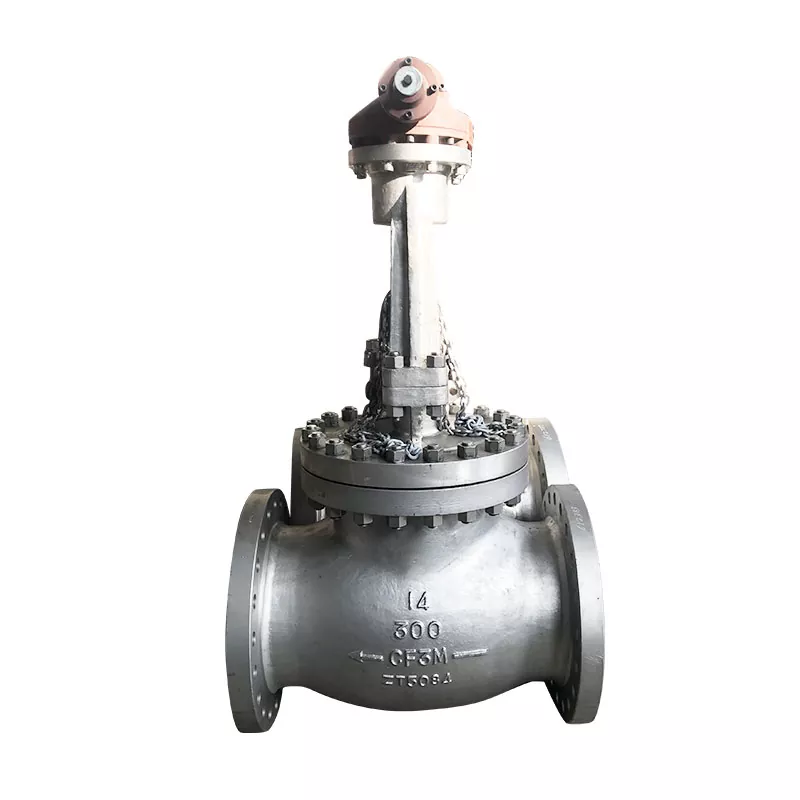
Stainless Steel Globe Valves
The structure of the Hanno Valve’s high quality Stainless Steel Globe Valves is relatively simple, convenient to manufacture and maintain, which make Stainless Steel Globe Valves more convenient in daily use and maintenance.The sealing surface of the Stainless Steel Globe Valves is not easy to wear and bruise. There is no relative slide between the disc and the sealing surface of the valve body when opening and closing, so the wear and bruise are not serious, the sealing performance is good, and the service life is long.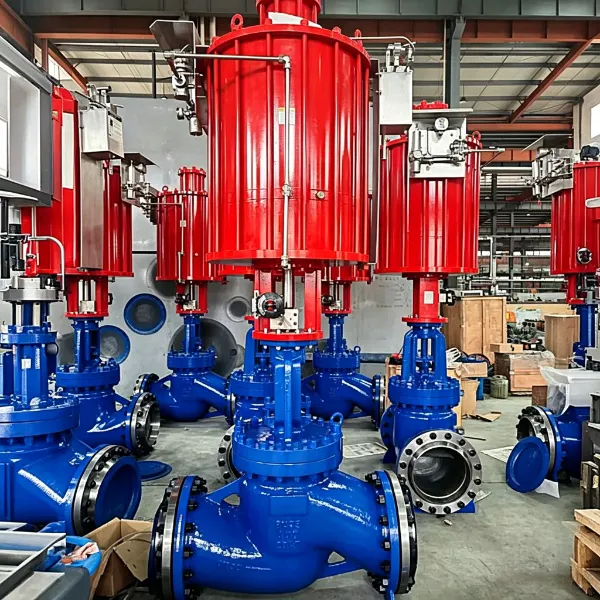
Pneumatic globe valve
Hanno Valve is a China pneumatic globe valve manufacturer and supplier specializing in industrial valve solutions. The Pneumatic Globe Valve is designed for automatic control of fluid shut-off, distribution, and flow regulation in industrial piping systems. Product Introduction
- Related Blog
- Reviews