Flexible Wedge Gate Valve
Flexible wedge gate valves are an essential component in demanding industrial piping systems, designed to deliver tight shut-off and long-term reliability under varying thermal and pressure conditions. Unlike a Wedge Type Gate Valve with a rigid construction, the flexible wedge design incorporates a two-piece disc with a precision-machined flex slot, allowing the seating faces to adjust independently to thermal expansion and body distortions without compromising seal integrity. This makes it a preferred choice over a Solid Wedge Gate Valve in applications where temperature fluctuations frequently occur. Additionally, compared to a Double Wedge Gate Valve, which uses two separate wedge faces held by a ball-and-socket or spherical seat arrangement, the flexible wedge offers simpler maintenance and better resistance against thermal binding while still providing excellent double-block-and-bleed capability. Engineers consistently specify flexible wedge gate valves for steam, hot oil, hydrocarbon processing, and power generation services because the built-in flexibility prevents jamming and ensures smooth operation even after prolonged exposure to high temperatures.
Flexible Wedge Gate Valve models in our portfolio are engineered to API 600, API 6D, and ASME B16.34 standards, meeting the stringent requirements of global refining, petrochemical, and power industries. The core design features a two-piece wedge connected by a precision groove or slot, typically forming an H-shape or parallel flex arrangement that lets each disc face independently align with its seat. When the valve is closed, line pressure pushes the upstream disc against the seat, while the downstream disc remains self‑aligning, eliminating the possibility of leakage even when the pipeline undergoes bending or thermal cycling. Metal-seated configurations are standard, with optional hard-facing overlays such as Stellite 6 or 21 on seating surfaces to extend service life in abrasive or high‑cycle applications. Stem and bonnet designs can be selected as bolted bonnet, pressure seal, or welded, depending on pressure class and temperature requirements. Operation is available via handwheel, gearbox, pneumatic actuator, or electric actuator, and all valves undergo hydrostatic shell and seat testing per API 598 before shipment. Below you will find detailed technical specifications and material options that illustrate the adaptability of these valves across multiple service conditions.
- Size Range: 2″ through 48″ (DN 50 – DN 1200), with larger dimensions available upon request
- Pressure Ratings: Class 150, 300, 600, 900, 1500, and 2500
- Temperature Range: -29°C to 650°C (-20°F to 1200°F) depending on material selection
- Design Standards: API 600, API 6D, ASME B16.34, BS 1414, EN 1984
- Face-to-Face: ASME B16.10 (short pattern and long pattern available)
- End Connections: Flanged (RF, RTJ), Butt Weld (BW), and Hub ends as per ASME B16.25
- Testing: API 598, API 6D, with optional helium leak detection or fugitive emissions certification to ISO 15848-1
- Operators: Handwheel, bevel gear, electric actuator (multi-turn, intelligent control), pneumatic actuator, hydraulic actuator
| Component | Material Options |
|---|---|
| Body & Bonnet | A216 WCB, A217 WC6, A217 WC9, A351 CF8, A351 CF8M, A352 LCC, A890 4A (Duplex), Inconel 625 |
| Wedge (Flex Disc) | A216 WCB + 13Cr facing, A217 WC6 + Stellite, A351 CF8M, Duplex, Monel |
| Seat Ring | Integral or renewable — A105 + Stellite 6, A182 F316, Inconel, Hastelloy |
| Stem | A182 F6a, A276 410, A276 316, A564 630 (17-4PH), K-Monel |
| Gasket & Packing | Spiral-wound SS316/graphite, Graphite die-formed rings, PTFE (for lower temperatures), Teflon composites |
| Bolting | A193 B7, A193 B16, A320 L7, A453 660, with appropriate nuts per A194 |
The flexible wedge gate valve’s ability to maintain a bubble-tight seal under fluctuating thermal loads makes it irreplaceable in main steam isolation, turbine bypass, feedwater control, and high‑pressure drain services. With the comprehensive range of materials and trims available, these valves can be matched precisely to process fluids, whether they involve superheated steam, sour gas, cryogenic media, or corrosive chemicals. Inspection and maintenance are straightforward: the split‑wedge design allows in‑situ lapping of seats without removing the entire disc assembly, reducing downtime significantly. Every valve can be supplied with an optional bypass line, drain port, or instrument tap to meet specific plant requirements. Full material traceability, positive material identification reports, and certified pressure test records are provided as part of the standard documentation package, ensuring compliance with international quality and safety regulations.
Related Products



Hot Products

Cast Steel Wedge Gate Valves
The structure design of Hanno Valve’s Cast Steel Wedge Gate Valves is reasonable, the valve rigidity is good, the flow pass is smooth, the flow coefficient is small.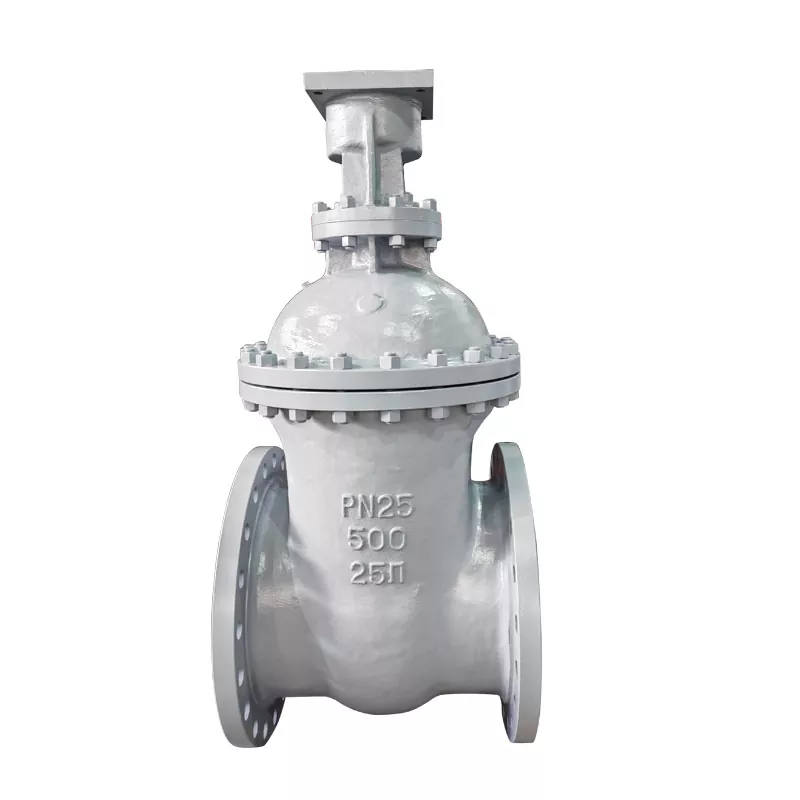
Non Rising Stem Gate Valves
The stem of Hanno Valve Non Rising Stem Gate Valves is hidden inside, the appearance is simple and does not take up too much space, especially suitable for small pipelines or low-viscosity fluids. This design can also reduce the interference of external factors on the valve stem and further extend the service life of the valve.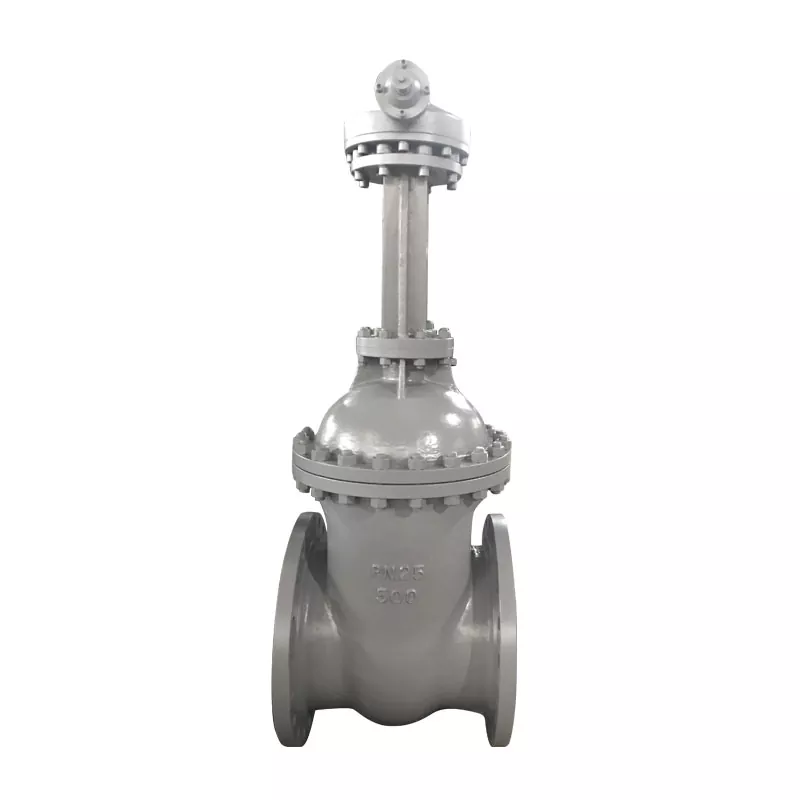
Bevel Gear Gate Valves
Hanno Valve Bevel Gear Gate Valves structure make the opening and closing operation labor-saving, and can be controlled by hand wheel or electric actuator, improving the convenience of operation.
Cryogenic Extension Gate Valves
Hanno Valve is a specially in manufacture Cryogenic Extension Gate Valves in China. We are Cryogenic Extension Gate Valves suppliers. Our Cryogenic Extension Gate Valves designed according to two times subzero treatment, stem surface chrome, or nitriding treatment, can effectively prevent graphite hardening and stem bite under low temperature conditions.
Low Temperature Check Valves
With rich expertise in cryogenic valve manufacturing, Hanno Valve offers both useful designed low temperature check valves and custom modifications of standard valves for cryogenic service, all processed in-house under rigorous quality control. We provide custom modifications and expedited non-destructive testing.
GOST Standard PN40 DN150 Flanged Cast Steel Globe Valve
Inquire about factory-direct GOST Standard PN40 DN150 Flanged Cast Steel Globe Valves manufactured by Hanno Valve. Designed for 4.0 MPa gas and liquid transmission lines, this heavy-duty DN150 unit utilizes 25L cast steel to withstand structural pipeline strain and pressure spikes across Eastern European refining and petrochemical infrastructure.
- Related Blog
- Reviews